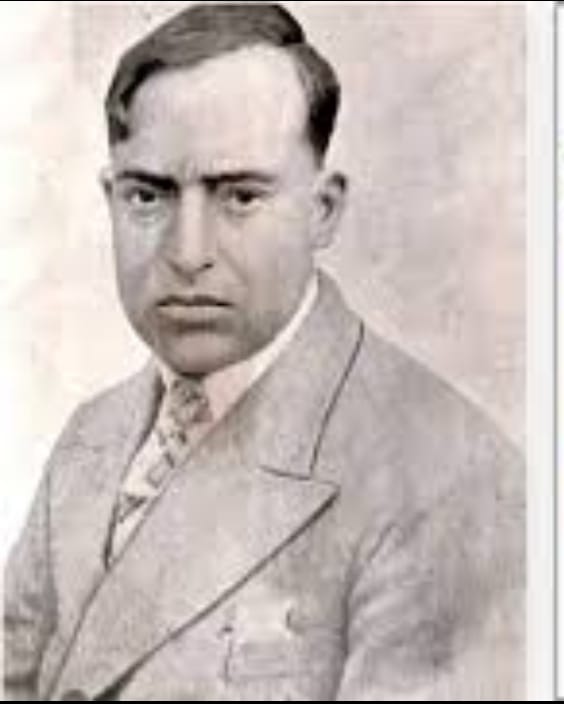
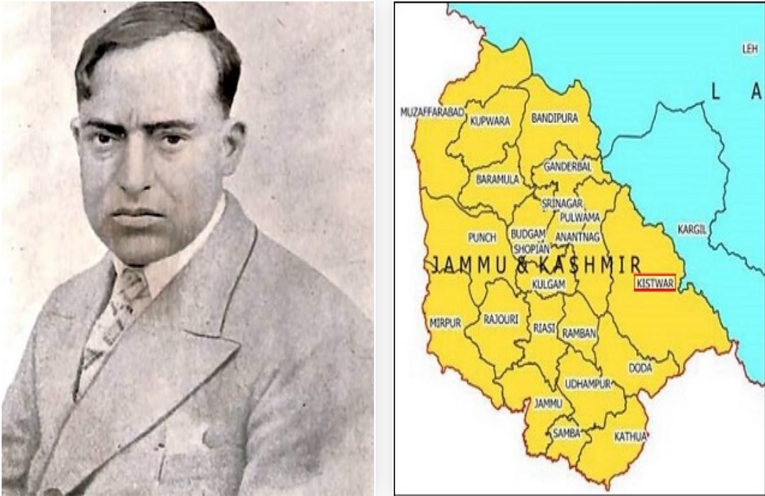
WAZIR-E- WAZARAT: DUNI CHAND MEHTA: BRAVE HEART OF KISHTWAR
Duni Chand Mehta hailed from a prestigious lineage of renowned Vaidyas (Ayurvedic physicians) in Kishtwar district, some of whom had served in the royal court of Jammu and Kashmir. Rising through the ranks, he held the esteemed position of Assistant Governor of Kashmir. In July 1947, amid mounting tensions before India’s independence, he was elevated to Wazir-e-Wazarat (Deputy Commissioner) of Muzaffarabad, a strategic northwestern frontier town within the princely state of Jammu and Kashmir. This appointment came at a pivotal moment, just months before the Pakistan-sponsored tribal invasions that triggered the state’s accession to India. Mehta’s tenure bridged colonial administration and the chaos of Partition. As a Kishtwar native, he embodied the region’s intellectual and administrative contributions to the Dogra kingdom, where Vaidya families like his preserved ancient healing traditions while engaging in governance. His role in Muzaffarabad underscored the diverse Hindu-Sikh-Muslim fabric of pre-1947 J&K, now fractured by conflict.
The Tragedy of 1947: Partition and Personal Loss
The year 1947 A.D. marked a turning point in the destiny of the Indian subcontinent. The joy of Independence was overshadowed by the shadow of Partition—a wound that bled across Punjab, Bengal, and Kashmir. When Pakistan’s tribal raiders and irregular forces invaded Jammu and Kashmir in October 1947 violence and devastation swept across the frontier regions.
In July 1947, the Kashmir government appointed Duni Chand Mehta as Wazir-e-Wazarat in Muzaffarabad and sent him there. He had been serving as Assistant Governor in Srinagar. In the same month, he traveled from Srinagar to Muzaffarabad to assume his new position. About one month later, he returned to Srinagar for some official work and, on his way back, took his wife, Smt. Krishna Meh
ta, and their children to Muzaffarabad with him. Shri Duni Chand Mehta had five children—three daughters and two sons. The eldest daughter, Veena, was about 14 and a half years old at the time; the middle daughter, Sheela, was 10 and a half years old; and the youngest daughter, Kamlesh, was 9 and a half years old. Their two sons were one 8 and a half years old and the other 7 years old. At that time, there was another girl with them named Swadesh, who was the daughter of his elder brother, her age was 14 years.
At that time, Muzaffarabad was a border area of the Jammu and Kashmir province, but there were no arrangements like phones for timely communication. On October 21, 1947, Shri Duni Chand Mehta had invited army colonels, captains, and others to dinner at his home. However, they did not arrive for the dinner until around 10:00 PM because they were attending a meeting at a nearby bungalow that belonged to the Police Superintendent. A short while later, a captain returned in his jeep—he had apparently gone for patrolling near the border. After his arrival, everyone sat down to eat, and around 12:30 AM, they all went back to their respective homes. In the morning of October 22, 1947, around 4:30 to 5:00 AM, sounds of gunfire began to be heard in the Muzaffarabad area. Explosions were also occurring every few minutes. By morning, panic had spread throughout the town. The sound of bullets, people’s screams, and cries of distress had shaken the entire area. The attackers were advancing wherever they went, killing people and setting fires, even setting the local hospital ablaze. Mehta Sahab left his wife and children at the Kothi and set out himself to take charge of the front line. But by then, the invaders had attacked their kothi as well. Smt. Krishna Mehta fled from there with children. On the way, they met some people, and upon talking to them, they learned that Duni Chand Mehta had arranged for them to stay at the Nawab chaparsi’s house. They all went to his house with him. But around 10 p.m. that night, they had to flee from there too and take shelter in another house.
When Duni Chand Mehta came out from his kothi, he set out towards the local high school along with the Superintendent of Police, a Sub-Inspector, and twenty-three police constables, where cannon had been posted only a few days earlier. At that place nine constables had been deployed, but they were not present at the time. Everyone advised Mehta Sahab not to go there, but he did not listen to anyone. Some local people gathered there and told Duni Chand Mehta that the attackers were far too numerous for him to confront, and that he should either leave that place or allow them to hide him and somehow get him out safely. But he refused to listen to anyone. Instead he said, “An attack has come upon your country; stand together and save it. Instead, you are asking me to hide, Come, and let us go where the police have taken up their position.” Yet there was no one there willing to listen to him. He tried calling out to everyone, urging them to come forward and join the fight. Even the police constables had lost their nerve and hidden themselves. Only a few men went with him to the place where the police post was, but there too nobody formed a proper front. At that point there was simply no one to obey him. Arranging things as best he could, he said, “I have made every effort to fight, but no one listens. Everyone is only worried about himself. Now I cannot save you. I am going home; that is also my duty.”Some people told him, “The raiders have already entered your house; do not go there, otherwise they will kill you as well.” But he did not heed their words. Taking a Sub-Inspector with him, he proceeded towards his kothi.
When Shri Duni Chand reached near his kothi, he saw that about forty to fifty raiders were already inside, breaking and looting the house. The police inspector then turned back and left from there. His servant Om, who was hiding in the bathroom, saw him coming and with low voice warned him about the situation there and told him that his wife (he referred them as Mataji) had gone with his children from here. He said to him that why you drive away, this was the time of sacrifice, not for running away. I came home so that we could all embrace death together. Suddenly some invaders came out from inside the house, all of them immediately leveled their guns at him. A local man rushed to the spot and tried to save him, but the raiders opened heavy fire on his chest with bullets, and he attained a heroic death right there.
A few hours later, a man named Shivdayal arrived there along with his companion Ramchand. On the way they saw the body of Duni Chand Mehta lying on the ground. At that very moment another local resident also came to the spot. All of them lifted the body and carried it to the bed room of his kothi, where they placed it. After that, they set the kothi on fire, and in this way his last rites were performed right there. Later, the local residents say that when the raiders came out after killing him, they were heard saying, “Today we have killed a Dogra soldier; his bravery will remain in our memory for a long time. We had orders to capture him alive, but he replied in such a way that we became angry and opened fire, finishing him off.”
We lost a Lion and son of soil in that tragic incident of Muzaffarabad, who faced death without fear and sacrificed his life for the sake of his Motherland.
Authored By: Sunil Bhagat
Technician-I, Govt. Degree College Kishtwar
Email:sb3272772@gmail.com
Source: Kashmir Par Hamla by Smt. Krishna Mehta
Disclaimer:This article presents the author’s personal research and interpretation of historical events. www.mykishtwar.com provides this platform for the dissemination of information and diverse perspectives. The accuracy, completeness, and validity of any statements made within this article are solely the responsibility of the author. The content of this article is the sole responsibility of the author. www.mykishtwar.com does not assume any liability for the information presented. The author’s views and opinions do not necessarily represent those of www.mykishtwar.com. Readers are encouraged to conduct their own research and verify the information presented.