Area (Sq. Km)
Population (2011)
Town Elevation
Tehsils
From Jammu
Year Formed
About District Kishtwar — where the perfume of saffron drifts across Himalayan ridges, sapphires shimmer beneath ancient riverbeds, and centuries-old shrines stand as timeless sentinels of faith. This is not merely a place on a map — it is a way of life, a confluence of landscapes and legacies that has quietly shaped one of the Indian subcontinent’s most extraordinary mountain communities.
About District Kishtwar – Overview & Identity
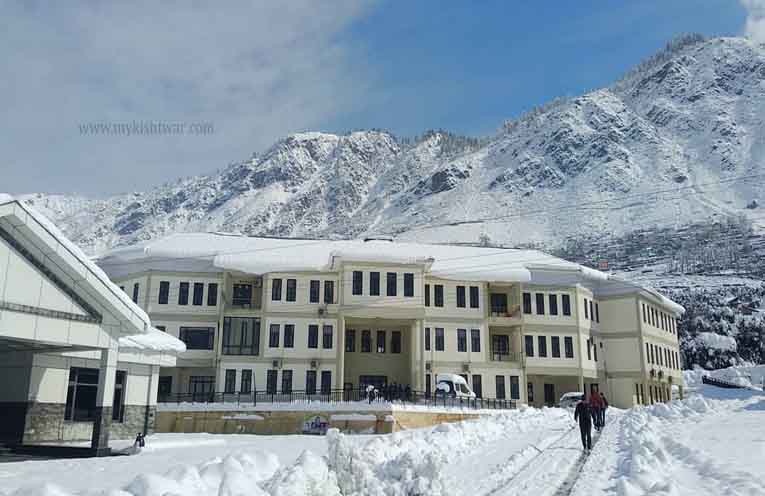
Nestled deep in the Greater Himalayas, District Kishtwar is one of Jammu & Kashmir’s most captivating and geographically significant districts. Long celebrated as the Land of Saffron, Sapphires, and Shrines, this storied highland territory has an identity shaped equally by its dramatic natural landscape and its layered, multicultural heritage.
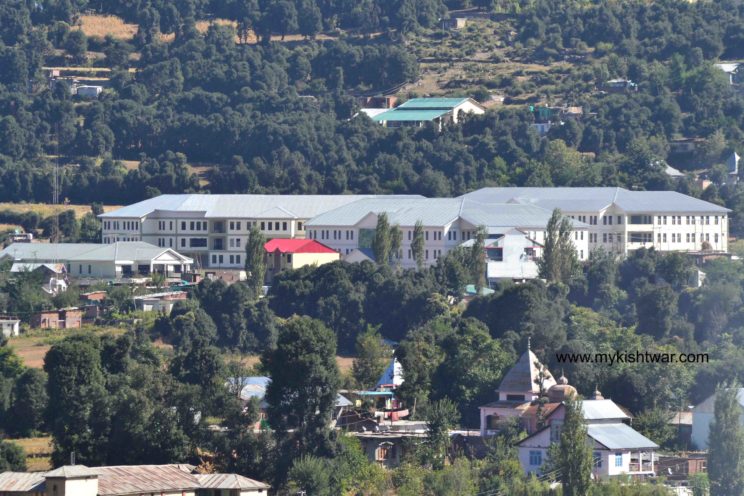
Kishtwar stands apart not just for its extraordinary beauty but for its sheer scale — covering 7,737 sq. km, it ranks as one of the largest districts in the union territory, surpassed in area only by the vast high-altitude districts of Leh and Kargil. Its expanse represents nearly half the combined area of all eleven districts in the Kashmir Valley, and approximately one-third of the entire Jammu region.
🌸 World-class Saffron
Kishtwar’s saffron — cultivated in the villages of Pochhal, Hatta, Matta, and Berwar — is among the finest in India, rivalling Kashmir’s famed variety in colour and aroma. The only saffron-producing land in the Jammu province.
💎 Sapphire Mines
The Paddar region’s sapphire deposits are internationally renowned. The Kashmir Blue Sapphire, mined at 4,267m altitude, is the world’s most coveted gemstone. Discovered in 1881.
🕌 Sacred Shrines
From the revered Machail Mata temple — drawing lakhs of pilgrims annually — to ancient ziarats and Buddhist gumpas, Kishtwar is a living mosaic of spiritual traditions.
🏔️ Himalayan Wilderness
Home to the only National Park of Jammu province and some of the subcontinent’s most untouched alpine terrain — snow leopards, Hangul, and Himalayan brown bears roam freely here.
About District Kishtwar – Geography & Location
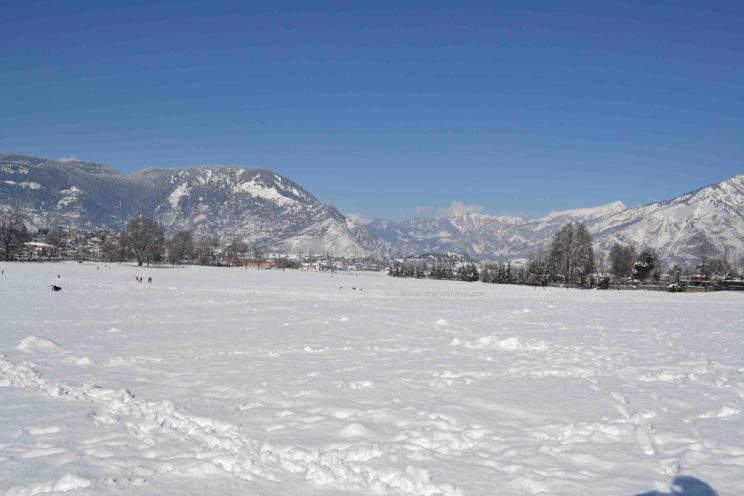
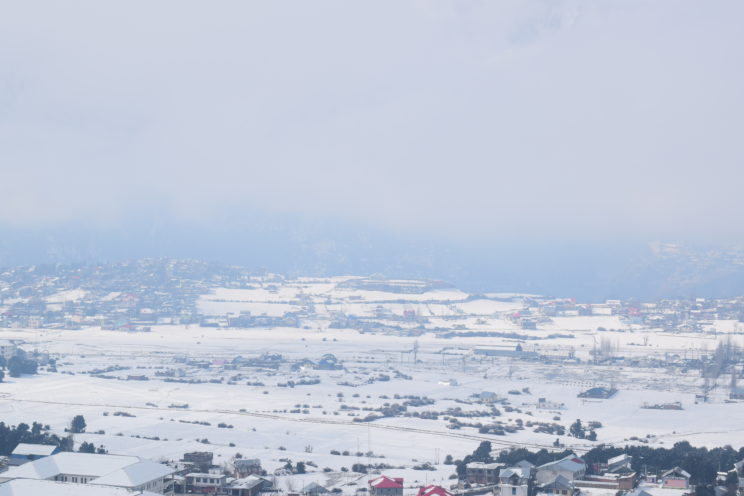
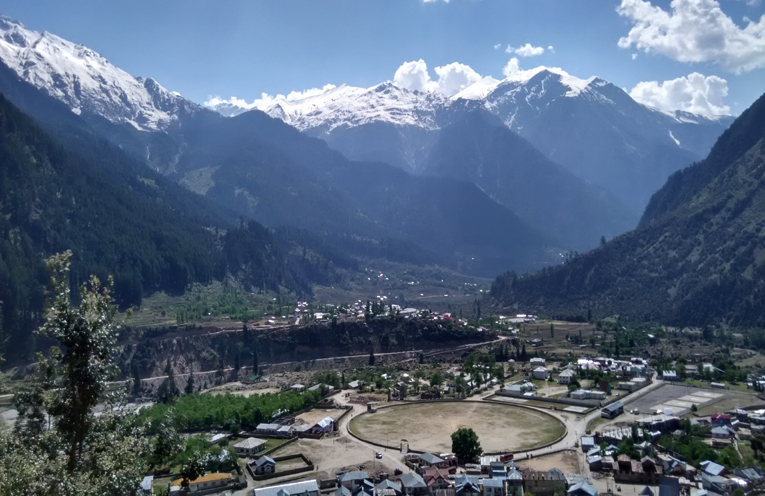
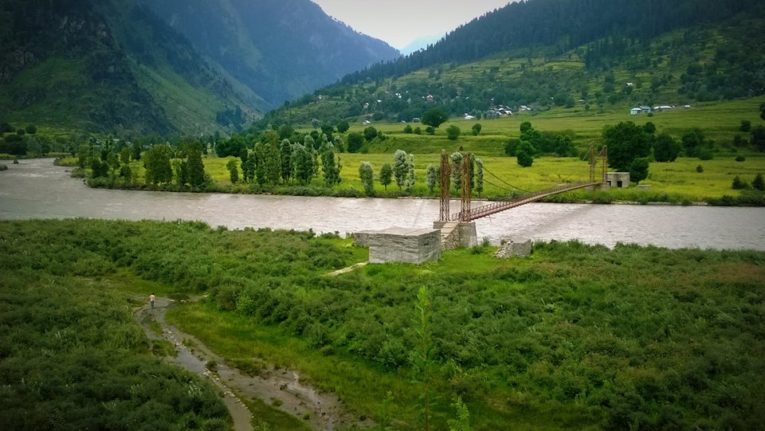
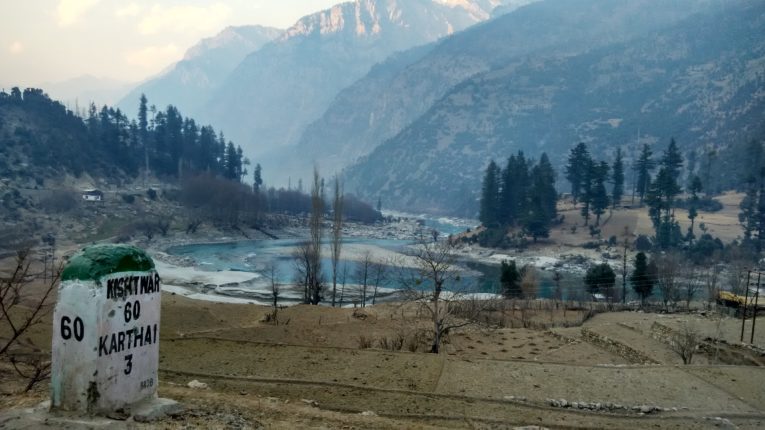
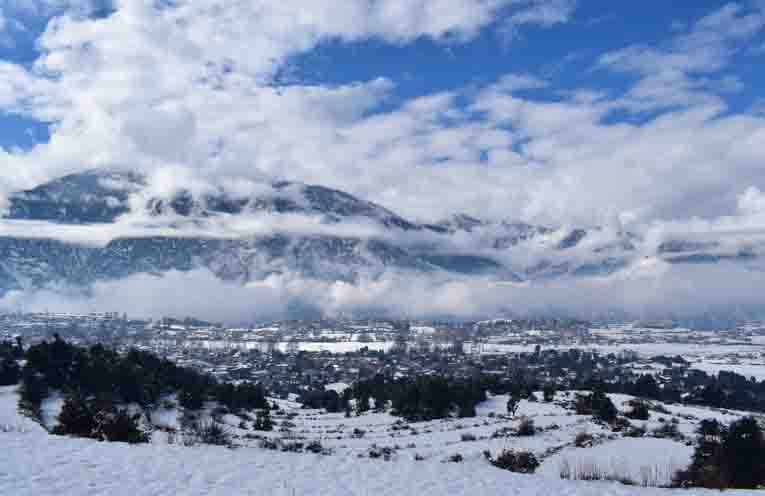
District Kishtwar occupies a rugged, almost entirely mountainous terrain — a landscape reminiscent of Himachal Pradesh’s highland valleys or the stark grandeur of Ladakh. Every corner of the district is defined by towering ranges, thick forests, and pristine river systems. Nearly the entire district receives substantial snowfall in winter, blanketing high-altitude villages and passes in a pristine white that makes the landscape truly otherworldly.
About Distrcit Kishtwar -Historical Background
Kishtwar’s history stretches back through the medieval period when it functioned as an independent hill state, governed by its own rulers and maintaining distinct political autonomy. This changed decisively in 1821 AD, when Maharaja Gulab Singh — the formidable Dogra ruler of Jammu — annexed Kishtwar into his expanding dominion, setting the stage for its eventual integration into the princely state of Jammu & Kashmir.
📜 Administrative Milestones
1821 AD — Maharaja Gulab Singh annexes Kishtwar into his Jammu dominion
1948 — Becomes part of newly created District Doda in post-independence reorganisation
July 2006 — CM G.N. Azad announces creation of District Kishtwar
2007–08 — District Kishtwar formally constituted with its own administration, ranked 20th in J&K by population
About District Kishtwar – Administrative Divisions — 11 Tehsils
District Kishtwar is divided into 11 Tehsils and 13 Development Blocks, each serving as an administrative hub for the surrounding villages and hamlets. The district headquarters is located in Kishtwar town — the largest urban centre and the cultural heart of the district.
Source: Census 2011 · ORGI (Office of the Registrar General & Census Commissioner of India)
Demographics & Census Data
According to Census 2011, District Kishtwar recorded a total population of 2,30,696 — comprising 1,20,165 males and 1,10,531 females. This marked a decadal growth of +20.88% over the 2001 census figure of 1,90,843. As of the latest estimates, the population is projected to be approximately 2.8 lakh by 2026.
Source: ORGI Census 2011
📊 2024 Updated Statistics
Literacy (2011): 56.2%
Literacy (PLFS 2023-24): 63.09%
Male Literacy: 73.25%
Female Literacy: 51.47%
Households: 45,209
Avg. Household Size: 5.10
93.56% Rural Population
Forest Area: 1,787.96 sq. km
Rank: 20th in J&K · 585th in India
Religious Composition — A Pluralistic Society
One of Kishtwar’s most defining qualities is its harmonious, pluralistic society. Hindus, Muslims, Sikhs, and Buddhists have coexisted here for centuries, sharing festivals, spaces, and daily life in a spirit of mutual respect that distinguishes the district from many others in the region. The communal harmony of Kishtwar — symbolised by the Chowgan ground which hosts Hindu, Muslim, and Sikh festivals alike — remained unbroken even during the Partition violence of 1947.
Source: ORGI Census 2011 · Main spoken languages: Kashmiri (68.59%), Hindi (27.80%), Bhotia (0.90%)
About District Kishtwar – Villages & Settlement Pattern
The district encompasses a network of 155 inhabited villages spread across its tehsils, with only a single uninhabited village recorded — a reflection of how thoroughly communities have adapted to even the most challenging Himalayan terrain. Permanent habitation thrives at altitudes as high as 9,500 feet.
Source: DSEO Kishtwar
Workforce, Economy & Scheduled Tribes
The economy of District Kishtwar is primarily agrarian — cultivation and agricultural labour form the backbone of rural livelihoods. However, a growing segment of the workforce is engaged in non-agricultural occupations, especially in Kishtwar tehsil. The district has a Labour Force Participation Rate (LFPR) of 81.05% (2023-24).
Source: ORGI Census 2011
Tourism & Natural Highlights
Beyond its statistical identity, Kishtwar is a destination of extraordinary experiential richness. Whether you seek spiritual solace, alpine adventure, or the simple pleasure of landscapes unmarked by mass tourism — this district delivers in abundance.
🌿 Chowgan Meadow
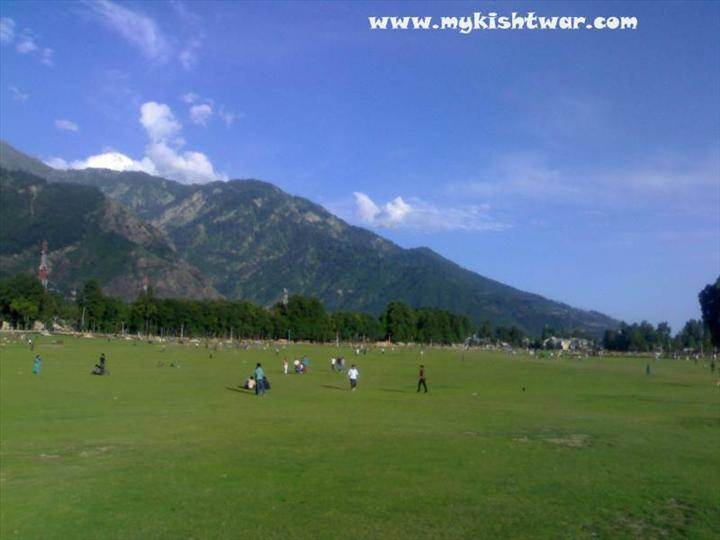
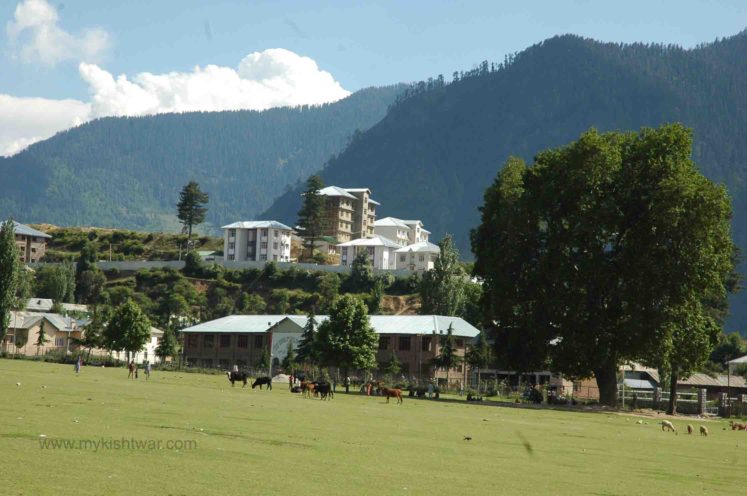
The iconic green meadow at the heart of Kishtwar town — 520 Kanals of pristine Himalayan grassland. Stunning year-round, magical and surreal under a blanket of winter snow.
🐆 Kishtwar National Park
The only National Park in the Jammu province — 2,191 sq. km of pristine Himalayan wilderness at 1,700–6,000m altitude. Home to snow leopards (4 confirmed 2024), Hangul, brown bears, and 50+ bird species.
🙏 Machail Mata Yatra
A revered annual pilgrimage drawing lakhs of devotees to the sacred Machail temple in Paddar each summer — one of the most important religious events in J&K.
🧗 Adventure Circuits
Trekking, mountaineering (Nun-Kun 7,135m), river rafting, paragliding, and rock climbing across the valleys of Warwan, Marwah, Dachhan, and Paddar — some of India’s last truly wild landscapes.
🌡️ Hot & Cold Springs
Natural thermal and mineral springs at Tata Pani (Warwan), Godresh Naag, and elsewhere — each with its own local lore and reputed healing properties for skin and rheumatic conditions.
🛕 Sarthal Mata Temple
The ancient 18-armed goddess temple on the Sarthal hill — a place of deep spiritual power and architectural heritage, drawing pilgrims from across Kishtwar and beyond throughout the year.
💡 Did you know? Kishtwar is not just one of J&K’s largest districts — its area represents nearly half the combined area of all eleven districts in the Kashmir Valley and about one-third of the entire Jammu region. Yet with a population of just 2.3 lakh, it remains one of India’s least densely populated districts — a paradise of untouched Himalayan wilderness awaiting the world’s discovery.
💎 Kishtwar — Where Every Ridge Holds a Story & Every Valley a Wonder 🌸
🏔️ Follow Us
Facebook : mykishtwar.com | Instagram : mykishtwar | Youtube : mykishtwar.com
Related Topics
Kishtwar Population Census 2011
Kishtwar Geography
Kishtwar Tehsils & Blocks
History of Kishtwar JK
Kishtwar Tourism
Land of Saffron Sapphire Shrines
Kishtwar Religious Demographics
mykishtwar.com
Statistical data sourced from the Office of the Registrar General & Census Commissioner of India (ORGI), Census 2011. Updated data from PLFS 2023-24 and IndiaStatDistricts. Content published and maintained by mykishtwar.com.
District Guide Series |
mykishtwar.com
· Kishtwar, Jammu & Kashmir, India