Sacred Naags of Kishtwar The Holy Springs & Their Living Heritage
Protected by faith, sustained by community, and flowing since the time of the Mahabharata — Kishtwar’s sacred Naags are among the most extraordinary natural and cultural heritage sites in the Himalayan world.
“Faith is taking the first step even when you don’t see the whole staircase.”
— Martin Luther King Jr. · and the faithful of Kishtwar have been taking that step for thousands of years
What is a Naag? — Kishtwar’s Living Water Heritage
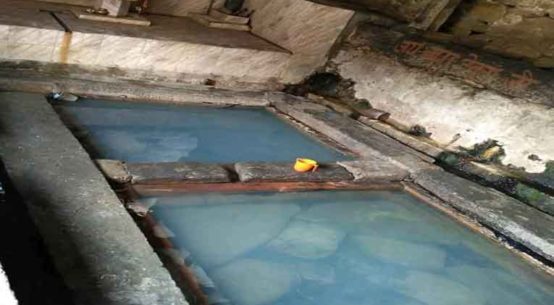
Cold Springs in Kishtwar : Centuries ago, this faith in the unknown inspired the elders of Kishtwar to worship their springs. What it would yield was perhaps unfathomed then — but today it is surely evident. NAAGS are protected sacred areas around a natural spring, each enveloped in a local legend or myth that explains why the place is holy. Rituals are organised to appease the presiding deity, and the spring itself is treated with the reverence due to a living divinity.
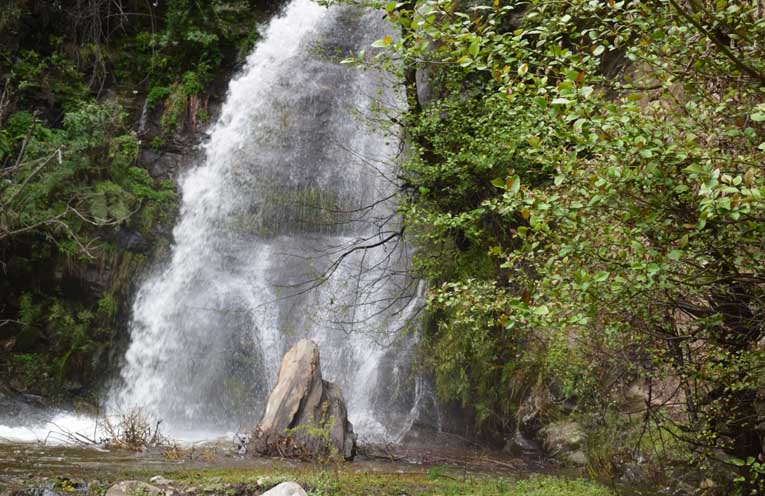
Pootinaag Waterfall
In J&K’s cultural tradition, it is the general perception that spring water emerges from a place where the Nag Devata (the serpent god) resides. Nag in this context refers not merely to a snake but to a powerful, benevolent deity associated with water, fertility, and cosmic balance — worshipped across the Hindu and Buddhist traditions of the Himalayas.
People from different communities and cultural backgrounds visit and worship the Naags. The diversity of devotees — Hindu, Muslim, Buddhist — coming to these springs is itself a testament to Kishtwar’s enduring tradition of communal harmony and shared reverence for nature.
🌿 Naags as Community Conservation Institutions
Cold Spriongs in Kishtwar : Beyond their spiritual significance, Naags function as one of Kishtwar’s most effective traditional conservation systems — a community-managed environmental protection model that predates modern conservation science by thousands of years. A local committee enforces strict rules around every Naag site:
◆
Water is for drinking only — laws prohibit wasting or dirtying around the spring site.
◆
No tree felling in the surrounding areas — communities actively plant trees around Naag sites.
◆
No toilets are permitted anywhere near the spring.
◆
Grazing above the spring is prohibited — to prevent contamination of the water source.
◆
Annual cleaning rituals — participated in by pilgrims who consider it auspicious to help clean springs and lakes.
Though shrouded in ritual and myth, Naags serve as a vitally important institution for the preservation of springs — an ancient ecological intelligence embedded in the faith and culture of Kishtwar’s people.
The Major Naags of Kishtwar
01
Godresh Naag
Kul Devta of Kishtwar · Semna Area · Oldest Spring
Godresh Naag (also written as Gudresh Nag) is the oldest and most revered of all Kishtwar’s sacred springs — and it holds the extraordinary distinction of being the Kul Devata (ancestral presiding deity) of the Hindu community of Kishtwar town. No other spring in the district carries such deep ancestral and cultural significance.
Location Simna area, outskirts of Kishtwar town
Distance from Bus Stand Just 5 km
Coordinates 33°18’49.81″N · 75°47’21.39″E
The water of Godresh Naag is believed to be so pristine and pure that it requires no pretreatment whatsoever — people use it directly from the source for drinking and all domestic needs. This is a rare distinction in modern times and speaks to the exceptional quality of the spring and the effectiveness of the community-managed conservation rules that have protected it for centuries.
The Mystery of Winter Warmth
In winter, the water of Godresh Naag becomes noticeably warm — while in summer it turns chilled. Local people explain this beautiful natural phenomenon through faith: they believe that the Nag Devata (serpent deity) hibernates beneath the spring in winter, and the heat of the divine presence warms the water. In summer, the deity becomes active again and the water returns to its cool, refreshing temperature. Whether explained by science or by faith, this seasonal temperature change is a remarkable and real phenomenon that has drawn wonder from generations of Kishtwaris.
Source: Drinking Water Status in Himalayan Hills — A Case Study of Springs at J&K (Kishtwar) and Uttarakhand (Tehri Garhwal) by Vijay Sharma (Semina Colony, Kishtwar) and his research group.
02
Pooti Naag
The Magnificent Waterfall · Visible from Kishtwar Town
From Kishtwar town, the Chowgan, and the surrounding Mandal area, a splendid view of a great waterfall on the western side can be seen falling down the gorges of the mountains. This is Pooti Naag — a seasonal waterfall of extraordinary scale and beauty, visible across an air distance of one to two kilometres from the town itself.
When the snow at its higher reaches melts — or during the monsoon season — the waterfall roars to life with such force that its sound can be heard across Kishtwar. In the quieter months it disappears, making it a seasonal spectacle of immense drama.
European Explorer Fredric Drew on Pooti Naag Waterfall
“By going some way down the slope, we get a fair sight of it though at a distance of a mile or more. The water comes down not in one but many jumps. The aggregate height of the falls within view is about 2,500 feet and above — with a few hundred feet more visible from other points. The first two falls are about 500 feet each, conspicuous from the town…”
Drew described how the waterfall exhibits every variety of movement — great leaps of high volume, the water then scattering into spray before collecting again, dividing into multiple streams that “at a distance seem like vertical, immovable white threads.” In the morning sun, the spray creates prismatic rainbow colours — a phenomenon that locals have long attributed to fairies who bathe there and reveal their magnificent colours through the spray.
🏞️ Best time to visit:Spring or the rainy season — when the waterfall is in full play and reveals its extraordinary natural spectacle to visitors and nature-lovers.
03
Gumai Naag
Sacred Spring of Nagseni · Post-Childbirth Ritual
Gumai Naag is located in Nagseni Tehsil — a Tehsil that takes its very name from the ancient Buddhist preacher Nagseen, whose connection to this area dates back to the 2nd century BC. The spring is considered extremely sacred by the Hindu community and draws visitors from across the district and beyond for its eye-captivating scenery and spiritual power.
Gumai Naag is the site of two distinct ritual traditions: Hindus sacrifice goats here to be protected from famine, heavy rainstorms, and natural calamities — and to fulfil personal wishes. In a deeply touching tradition, women are brought to this spring for their first bath after childbirth — a purification and blessing ritual that connects new life to the sacred waters of the Naag.
📍 Nagseni, full of scenic beauty, is located east of Kishtwar town and surrounded by forests. The area has been a centre of vital religious and cultural activities since the 2nd century BC — and Gumai Naag sits at the heart of this ancient sacred landscape. The spring has been documented in mykishtwar.com’s Nagseni Tehsil coverage and featured in video content celebrating the Gumai Naag Devta of Nagseni.
04
Petar Naag
Ice Lingams of Jawalapur · Cave of Shiva · Bonjwah
Near Jawalapur village in Bonjwah, a giant mountain named Paternag stands majestically. Within this mountain is a sacred cave where natural ice lingams form spontaneously — in the same miraculous manner as the legendary Baba Amarnath Cave of Kashmir. These ice lingams are revered as manifestations of Lord Shiva himself, and the site is considered one of Kishtwar’s most spiritually powerful natural shrines.
Devotees would traditionally visit the cave on the auspicious day of Shrawan Purnima — performing puja before the ice lingams and receiving Lord Shiva’s blessings. In times of drought, people would visit Petar Naag specifically to propitiate Lord Shiva for rains — and the rains, according to local tradition, would inevitably come.
⚠️ Preservation Alert: The mouth of the cave now stands blocked by huge boulders that have fallen from the mountain above. This irreplaceable site — Kishtwar’s own Amarnath — urgently needs the attention of the district administration and heritage conservationists to restore access to this sacred natural wonder.
05
Vimal Naag (Bimal Naag)
Incarnation of Lord Vishnu · Temple in Deodar Grove
Vimal Naag (locally called Bimalnag) is an incarnation of Lord Vishnu. The temple stands in the centre of a vast, lush green meadow amidst a grove of tall Deodar trees — one of the most breathtaking natural settings of any temple in Kishtwar. The idol of Lord Vishnu — seated on Sheshnag, holding a Shankh (conch shell) in one hand and a Chakra (disc) in the other — is made of rare black stone and has been a source of divine attraction for devotees from time immemorial.
A spring flows beneath the idol of Lord Vishnu and forms a small, sacred pond in front of the temple. The temple premises offer an eye-captivating beauty and salubrious climate, drawing both devoted pilgrims and nature-lovers throughout the year.
Annual Yatra from Neelkanth Mahadev Temple
In recent years, an annual Yatra to Vimal Naag temple has been established, which originates from the historic Neelkanth Mahadev Temple of Kishtwar — creating a living pilgrimage tradition connecting two of the district’s most sacred sites. The annual cleaning of the pond takes place on the auspicious day of Naag Panchami, celebrated throughout India as the day of serpent and spring worship.
The Kishtwar Development Authority has undertaken eco-friendly development at Vimal Naag, constructing two sheds, two scenic view points, and renovating the pond — making this site increasingly accessible and attractive for visitors and pilgrims alike.
🌿 Naag Panchami & Sacred Ecology: The practice of cleaning springs and lakes on Naag Panchami is not merely ritual — it is a contribution to a pollution-free environment, embedded in the psyche of every Indian. The worship of serpents and springs — both associated with Lord Shiva and Lord Vishnu — reflects an ancient understanding of water as the source of all life.
06
Abhshar Naag Ghan
The Channelled Springs · NOON Stone Pillars · Pandava Era
Abhshar Naag Ghan represents one of the most fascinating archaeological dimensions of Kishtwar’s spring heritage. Here, the water of springs has been channelled through ancient stone pillars — called NOON in the local Kishtwari dialect — to create engineered water delivery systems of remarkable sophistication.
Local people believe that these Noon stone channels belong to the Pandava era — the same ancient period to which Kishtwar’s famous step-wells (Baolies) are attributed. The precision of their construction, the durability of the stone workmanship, and the ingenuity of the water routing system continues to astonish researchers studying Kishtwar’s archaeological heritage.
These channelled springs share their heritage with the ancient Baolies documented across Kishtwar — at Bindraban, Telmoche, Arase, Kundali, Indarpayanar, and many more — all forming part of an extraordinary ancient water management civilisation that was flourishing in Kishtwar long before modern infrastructure arrived.
Other Important Springs of Kishtwar
Beyond the six major Naags above, Kishtwar is home to an extensive network of sacred and historically significant springs across its 11 tehsils. Each carries its own story, its own community guardians, and its own contribution to the district’s extraordinary water heritage:
🏛️ Naags, Baolies & Kishtwar’s Ancient Water Civilisation
Kishtwar’s Naags do not stand alone — they are part of an integrated ancient water heritage that also includes the famous Baolies (step-wells) found across the plateau and valley. At sites like Bindraban (with its 18 ancient Baolies), Telmoche, Arase, Kundali, Indarpayanar, and villages across Paddar, Nagseni, Sarthal, Marwah, and Kuntwara — the same ancient civilisation that built the channelled Noon springs also constructed elaborate step-wells to capture and store water.
Together, the Naags and the Baolies tell the story of a people who understood water management with extraordinary sophistication — and who ensured its preservation through both engineering and faith, building systems of conservation so effective that they continue to function millennia later.
💡 Did you know? The sacred Naag Panchami festival — celebrated throughout India — holds special significance in Kishtwar, where serpent and spring worship is not merely a cultural tradition but a living ecological practice. The ancient Noon stone water channels of Abhshar Naag Ghan and other sites are believed by local people to date to the Pandava era — making them potentially among the oldest surviving water engineering structures in the entire Himalayan region.