THE FORGOTTEN RELIC OF A BYGONE ERA
“AN ANCIENT BAJAR GOSAIN MANDIR IN DEDPETH KISHTWAR”
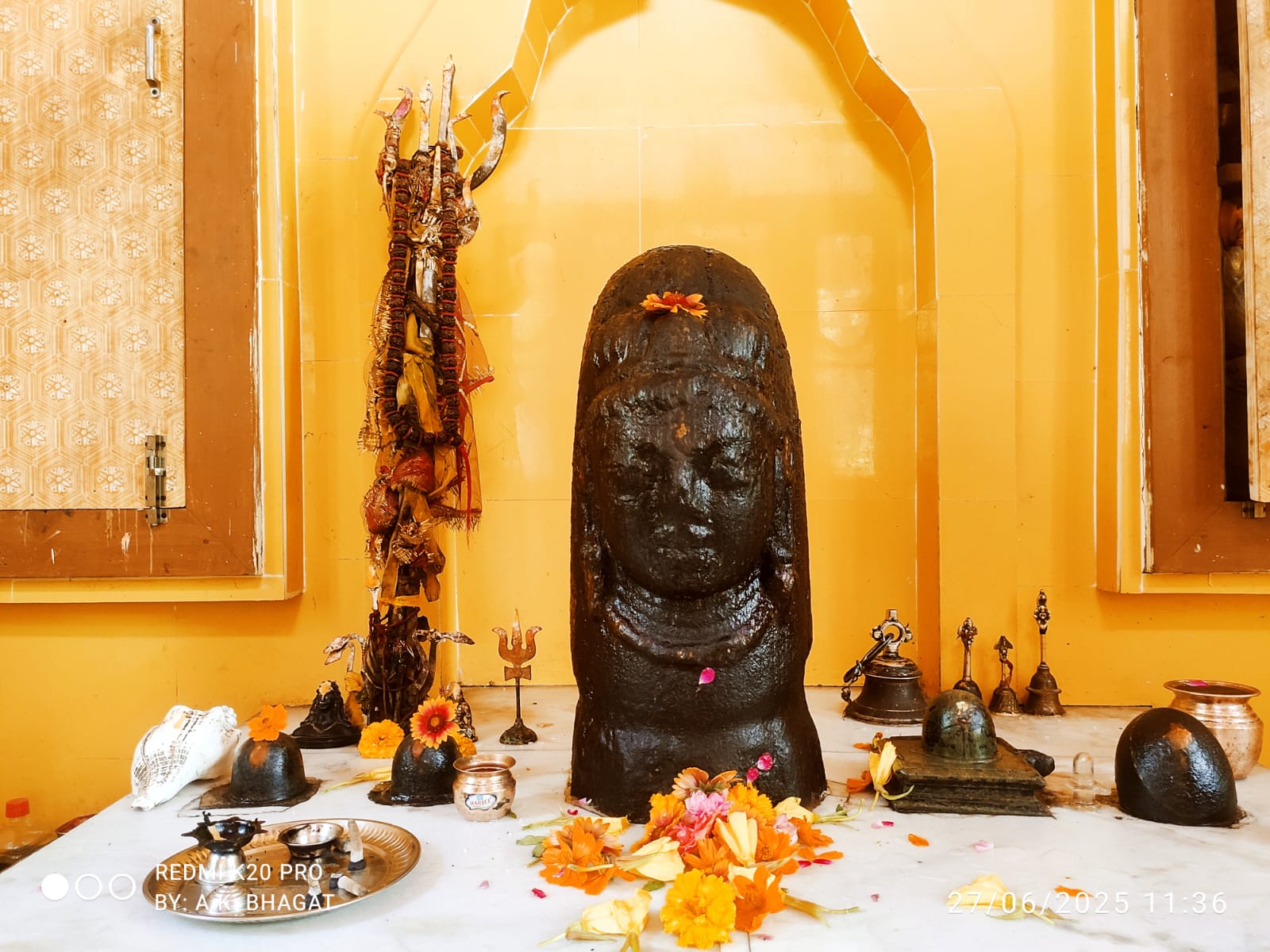
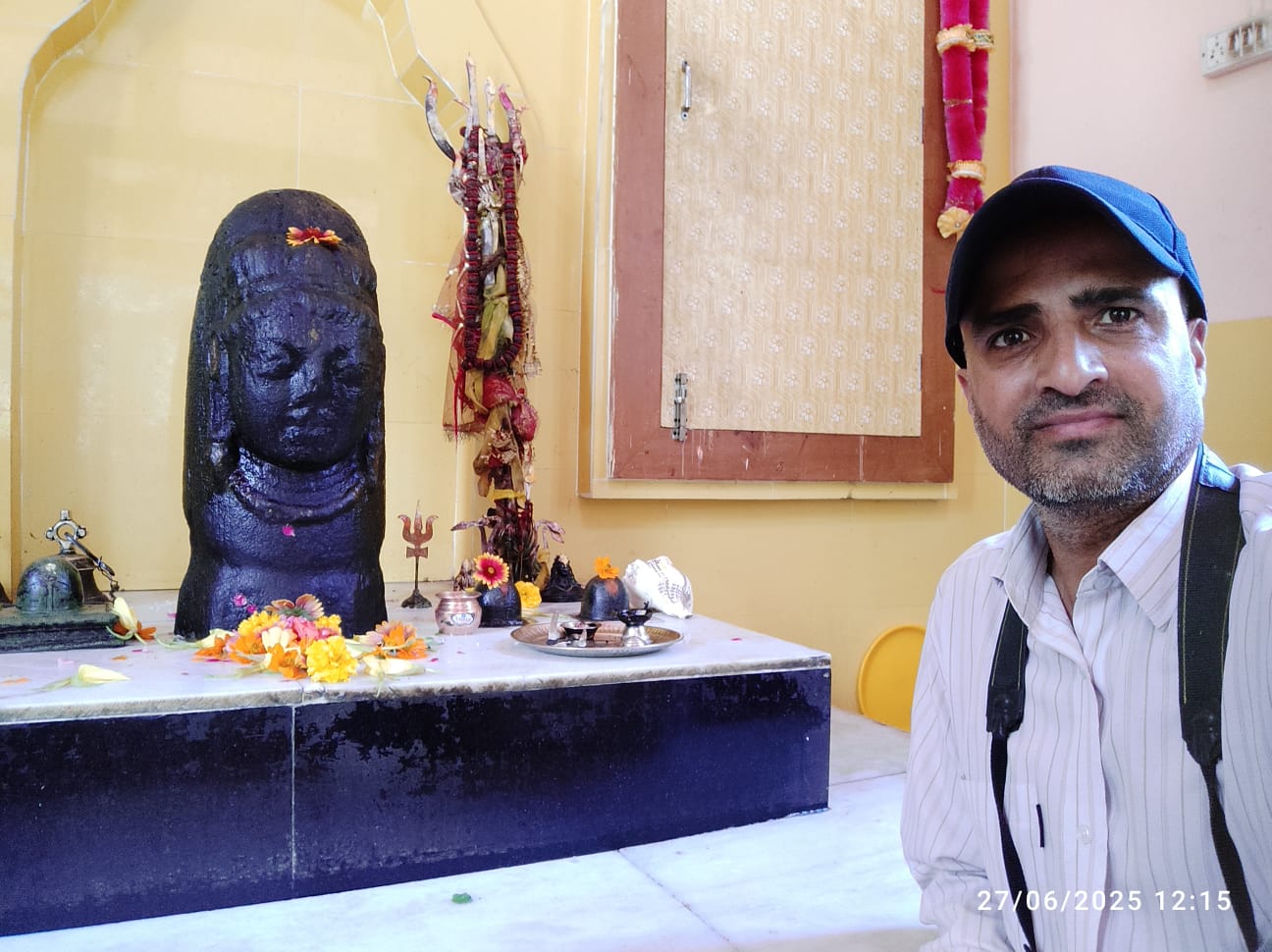
Dedpeth is a quaint and beautiful village situated on the banks of Maru river (In Kishtwari language the name of this river is Morye soder, but if we closely investigate this, we find that it is Marwah-Sounder. Sounder is a beautiful village in Dacchan). The Bajar Gosain Mandir of Dedpeth is one of the most ancient Mandir and Kuldevta of local habitants with an unknown age where an Ek Mukhi Shivalinga has been enshrined. .
Ek Mukhi Shivalinga boasts a profound history, tracing the transformative journey to the integration of human form. This iconic representation embodies a pivotal milestone in Hindu art and philosophical, harmoniously blending the formless and manifest aspects of Lord Shiva. The Ek Mukhi Shivalinga has a rich and ancient history and is mentioned in the Vedas and is described in detail in the Shiva Purana. The Ek Mukhi Shivalinga is worshiped as an incarnation of Shiva, symbolizing his power and glory. This also holds great cultural significance, as it is part of the rich culture and tradition of Hinduism. The Ek Mukhi Shivalinga has been worshiped in various Mandirs since ancient times, such as the Kashi Vishvanath Mandir Varanasi, Somnath Mandir Gujarat, Mahakaleshwar Mandir in Ujjain, Omkeshwar Mandir Madhya Pradesh, Kerdanath Mandir Uttarakhand.
This Ek Mukhi Shivalinga was also worshiped as Kuldevta during the Hindu Shahi dynasty of Kabul. Hindu Shahi dynasty also known as Kabul Shahi dynasty was a Hindu dynasty that rules over a vast territory encompassing present-day Afghanistan, Pakistan, and northwestern India. From 7th to 11th century, this dynasty played a pivotal role in shaping the history and preserving Hindu culture and traditions in the region, leaving an enduring legacy. The Ek Mukhi Shivalinga is also in the Mandir at Koti Teerath, Baramulla Kashmir. It is said to be from the pre-historic shrine of Adi Varaha which existed in Varahamulla (the original name of Baramulla).
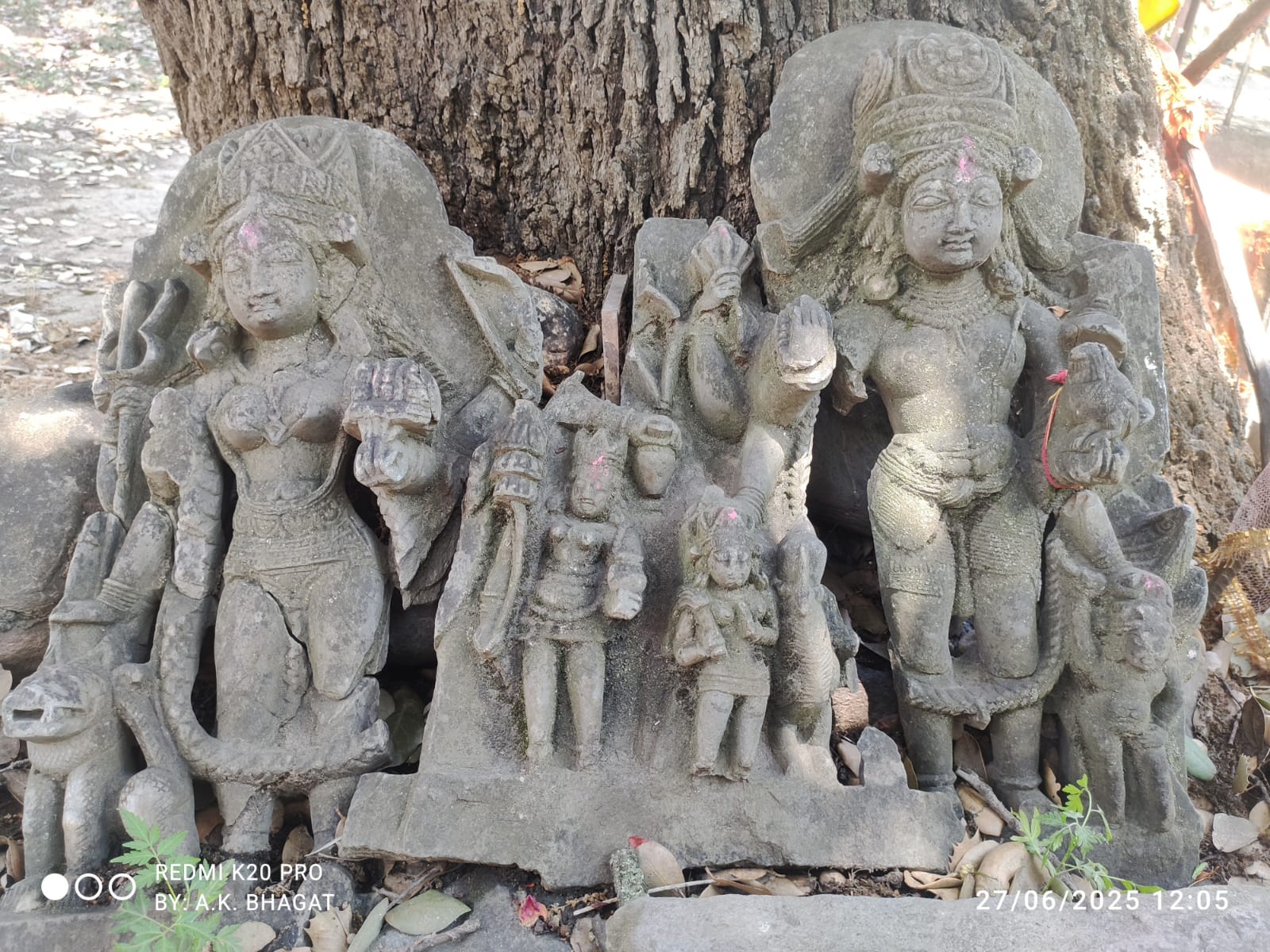
As per Sh. Badrinath Sharma ji’s account, the Mandir was invaded by the mughals, who attempted to demolish it. Several idols were vandalized by the mughals, and the remnants can still be seen within the Mandir complex. Further discussion revealed that when mughals desecrated some idols of this Mandir, the Kuldevta Bajar Gosain filled with intense anger, unleashed an entire army of wasps on mughals. Mughals were completely overwhelmed by the wasp attack and retreated in disarray, fleeing the scene. In this way, Bajar Gosain had personally protected his Mandir.
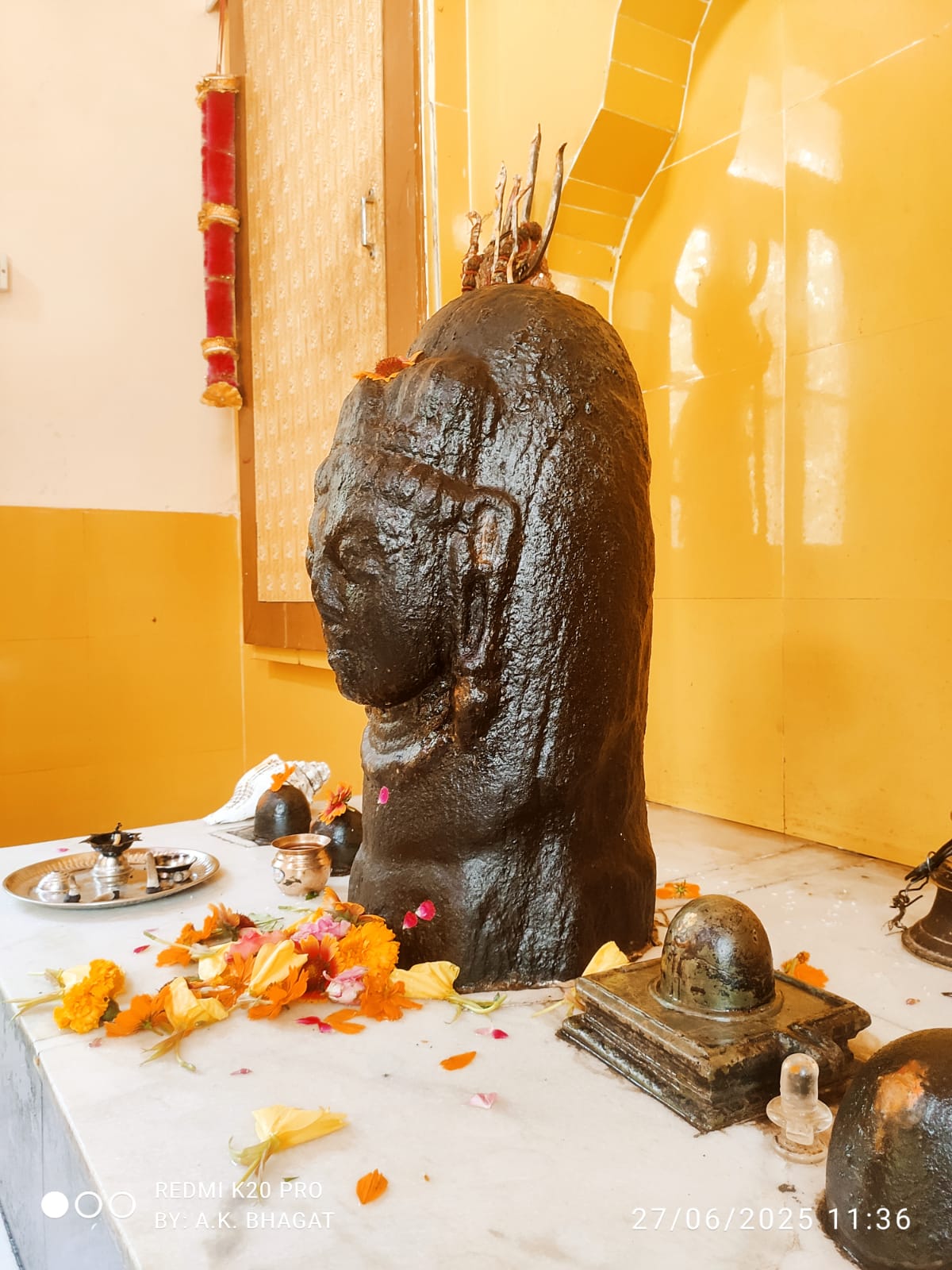
This sculpture masterfully depicts Lord Shiva in a dual representation, blending his abstract form as a Linga- a phallic symbol- with a human face. This fusion embodies the paradoxical union of the Nirguna (formless) and Saguna (manifest) aspects of the divine. As a potent symbol, the Ek Mukhi Shivalinga represents the boundless creative and generative energy of nature- the most formidable force in the cosmos.
The area of this Mandir is almost of one and half kanal and still is under construction. The local devotees are contributing physically and economically for the construction of this Mandir. The main idol of this Mandir is Ek Mukhi Shivalinga, which is black in colour and beautifully caved in stone. This Shivalinga is ten inches in diameter and two feet and seven inches tall. The face of this Shivalinga is twelve inches in length and five inches carved out. According to the regions local legend, Bajar Gosain has six more brothers and they are seven in numbers and are located in different places in this region. Bajar Gosain in Dedpeth, Rong Devta in Sigdi, Mehar Gosain in Mughal maidan, Varun Devta in Thakarie, Aapat Gosain in Tagood, one in Palmar and one in Sangambatti, all of whom radiating their divine presence and blessings.
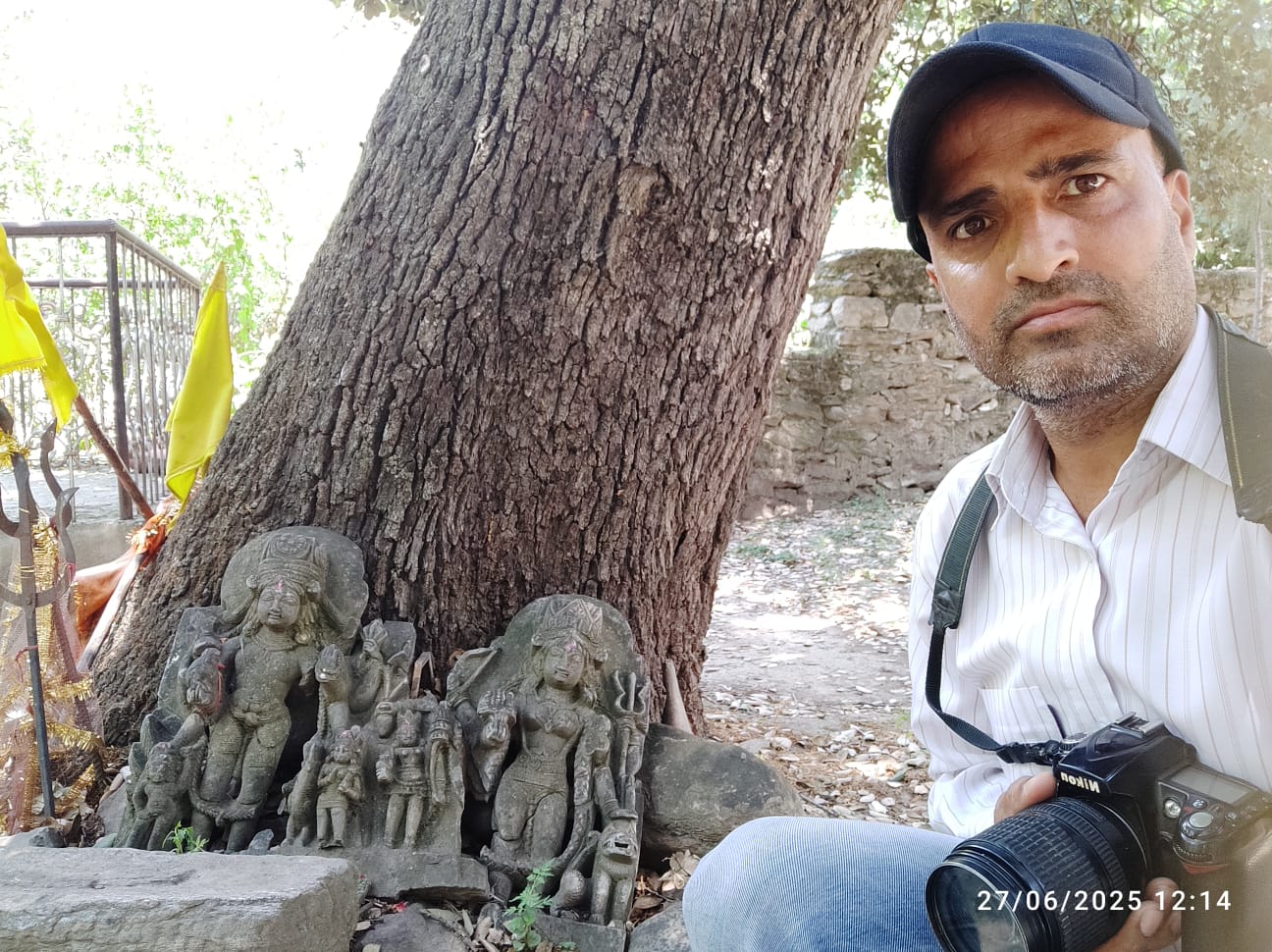
The idols that were damaged during the mughals invasion have been preserved within the Mandir complex. These idols are remarkably ancient and exhibit exquisite craftsmanship. These sculptures are crafted in three distinct stones. The first sculpture depicts a Goddess with four prominent hands. She holds a trident in one hand, a bow in another, a kamandal in the third and fourth hand rests on the head of a lion. A garland is visible, extending from her feet. Her head is adorned with an exquisite crown, rendering her utterly enchanting. This sculpture embodies majesty and is remarkably beautiful. The second sculpture is severely damaged, but closer inspection suggests that it is also a Goddess idol. Despite the damage, its four hands are still visible, although the main face is missing. One hand grasps the Shankha, another hand is raised in a blessing gesture, the third hand holds Kamandal, and the fourth hand rests on the head of another figure carved in the same stone. At the sculptures feet, two female attendants stand poised, awaiting instructions. Both attendants wear rosaries around their neck, and one attendant holds a fly whisky. This statue is also a beautiful specimen of fine artistry. The third statue seems to represent a deity wearing ornate crown. Its ears feature kundals, while its face is exquisitely carved. Few necklaces and pearl garlands adorn its neck. Although the right hand is damaged, the left hand grasps an object. A garland can be seen extending from its feet. Below this sculpture, on its side, is a depiction of an attendant.
Adjacent to these sculptures is a Shivalinga, which stands twenty one inches tall and one foot in diameter. On the right side of the main Mandir, is raised platform (Chobara) featuring several Shivalingas, which seems to be of considerable antiquity.
Anyone who lays eyes on these damaged sculpture feel a pang of regret that such masterful craftsmanship was destroyed. Every detail of these idols, from their facial features and hair to their ornate crowns, pearl necklace, garments, hands, and the weapons and kamandal they hold, is so skillfully executed that it has ability to mesmerize all who see it.
Our district Kishtwar is home of hundreds of ancient Mandirs and shrines that remain hidden and unknown to the masses. These Mandirs are in fact dedicated to the local deities or Kuldevtas, but their existence remains a mystery and often goes unnoticed by the common man, who is largely unaware of their existence. Many Shivalingas and deity idols have been discovered buried underground. Perhaps, in the past, people intentionally buried them in the earth to safeguard them against destruction or they were submerged due to the natural disasters. Sometimes, these relics are unearthed during digging and excavation activities. Hopefully we will discover many more Mandirs that houses ancient idols of deities. All that is needed is for us to allocate time to document these forgotten Mandirs and share our findings with the world.
Authored by: ANIL KUMAR BHAGAT
Mobile: 7051350159
Email: anilk11111982@gmail.com
Disclaimer:This article presents the author’s personal research and interpretation of historical events. www.mykishtwar.com provides this platform for the dissemination of information and diverse perspectives. The accuracy, completeness, and validity of any statements made within this article are solely the responsibility of the author. The content of this article is the sole responsibility of the author. www.mykishtwar.com does not assume any liability for the information presented. The author’s views and opinions do not necessarily represent those of www.mykishtwar.com. Readers are encouraged to conduct their own research and verify the information presented.