The Lost Monastery of Ahiliya – A Forgotten Himalayan Seat of Buddhist Learning
Nestled in the high valleys of Kishtwar, where the Chenab carves its way through the Greater Himalayas, lies village Ahiliya in Panchayat Gandhari, Tehsil Atholi, Paddar of district Kishtwar, U.T. J&K. To most maps it is a footnote, but to the history of trans-Himalayan Buddhism, it was once a vital artery. For centuries, this isolated hamlet housed a Buddhist Monastery and Learning Centre that drew scholars from across the mountain kingdoms. Its story is one of intellectual brilliance, artistic beauty, and tragic loss.
For the survey and search of Manuscripts and data collection under the Gyan Bharatam Mission in district Kishtwar, under the aegis of the Ministry of Culture, Government of India, I set out towards Ahiliya village, Panchayat Gandhari, Tehsil Atholi, Paddar on 15-04-2026 (Wednesday) with my fellow surveyor and close friend, Sh. Tenzen Sambial (Teacher). Our task was to identify the manuscripts in different villages and locations and upload the same on the Gyan Bharatam App. While trekking to village Ahiliya of Gandhari Panchayat, we observed some ancient ruins between the villages of Khijroni and Ahiliya. Local inquiries revealed intriguing and remarkable details about its historical significance.
The monastery at Ahiliya, locals say, was established time since immemorial by Buddhists from Bhutan. In the oral tradition of Gandhari, the centre predates the political boundaries that now divide the Himalayas. It belonged instead to a cultural sphere that stretched unbroken from Bhutan in the east to Ladakh and Zanskar in the west, with Tibet as its spiritual heart. That geography explains who came here. As per local traditions, many scholars from Zanskar, Ladakh, and Himachal Pradesh who made arduous journeys to Ahiliya to learn and meditate. At a time when travel meant weeks over snow-bound passes, the pull of this place had to be strong. The reason was simple: Ahiliya offered what few places could isolation, safety, and a living library. The site itself was chosen with care. Described as very beautiful and filled with dense forest trees, it combined the practical and the sacred. The forests provided timber, medicinal plants, and seclusion. The altitude and remoteness shielded it from the wars that periodically swept the lower valleys. Monks could debate philosophy in summer and retreat into solitary meditation when winter sealed the passes. It was, as one note puts it, an isolate and peaceful place. In the language of Buddhist practice, it was ideal for both Shedra, monastic study, and Drupdra, retreat.
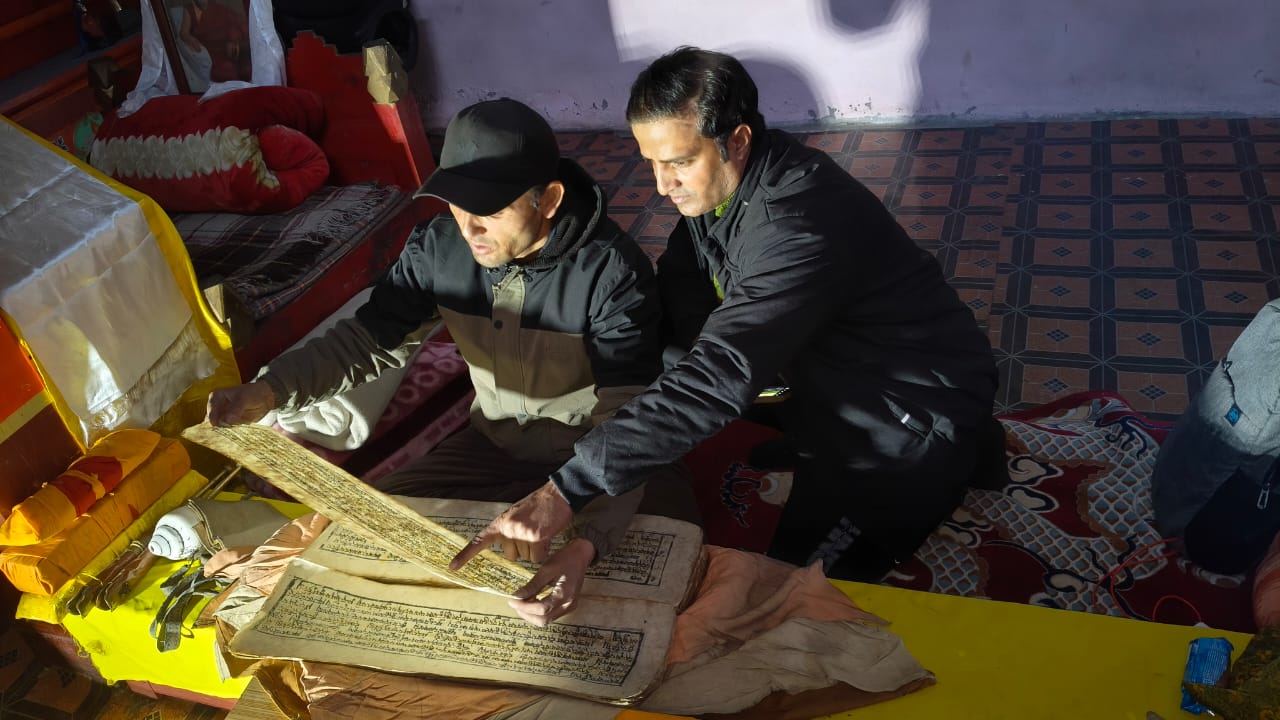
The greatest treasure of Ahiliya was not its buildings but its manuscripts. Thousands were housed here. Their origins map the entire Buddhist world of the second millennium. Texts were written by authors from Tibet, Nepal, Bhutan, and Nalanda University. Many were also composed on site. To understand what this means, consider the effort. Before print, every manuscript was copied by hand on birch bark, palm leaf, or handmade paper. Ink was mixed from soot and gum. A single Prajnaparamita text could take a scribe year. That Ahiliya held thousands suggests generations of continuous patronage and scholarly activity.
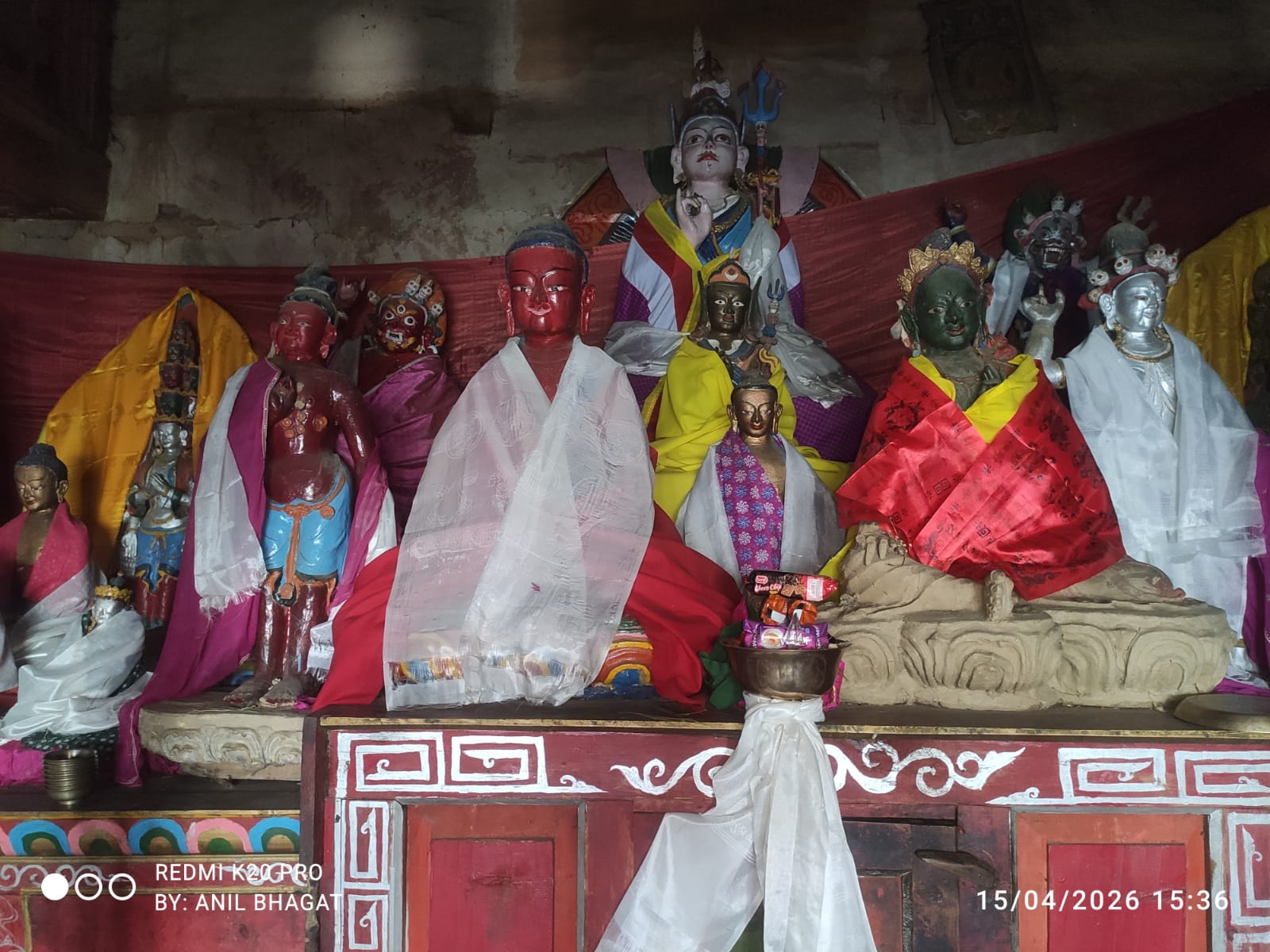
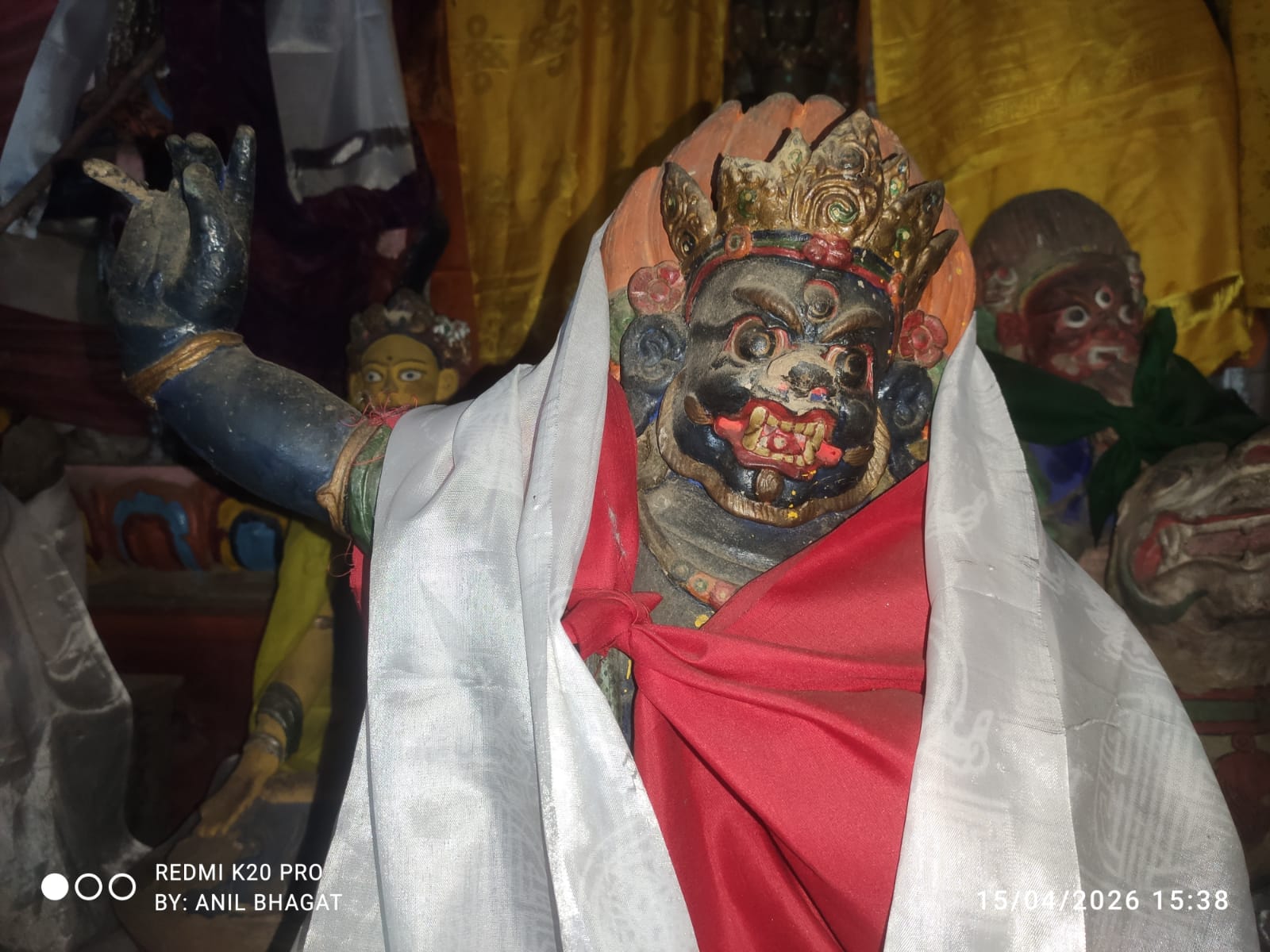
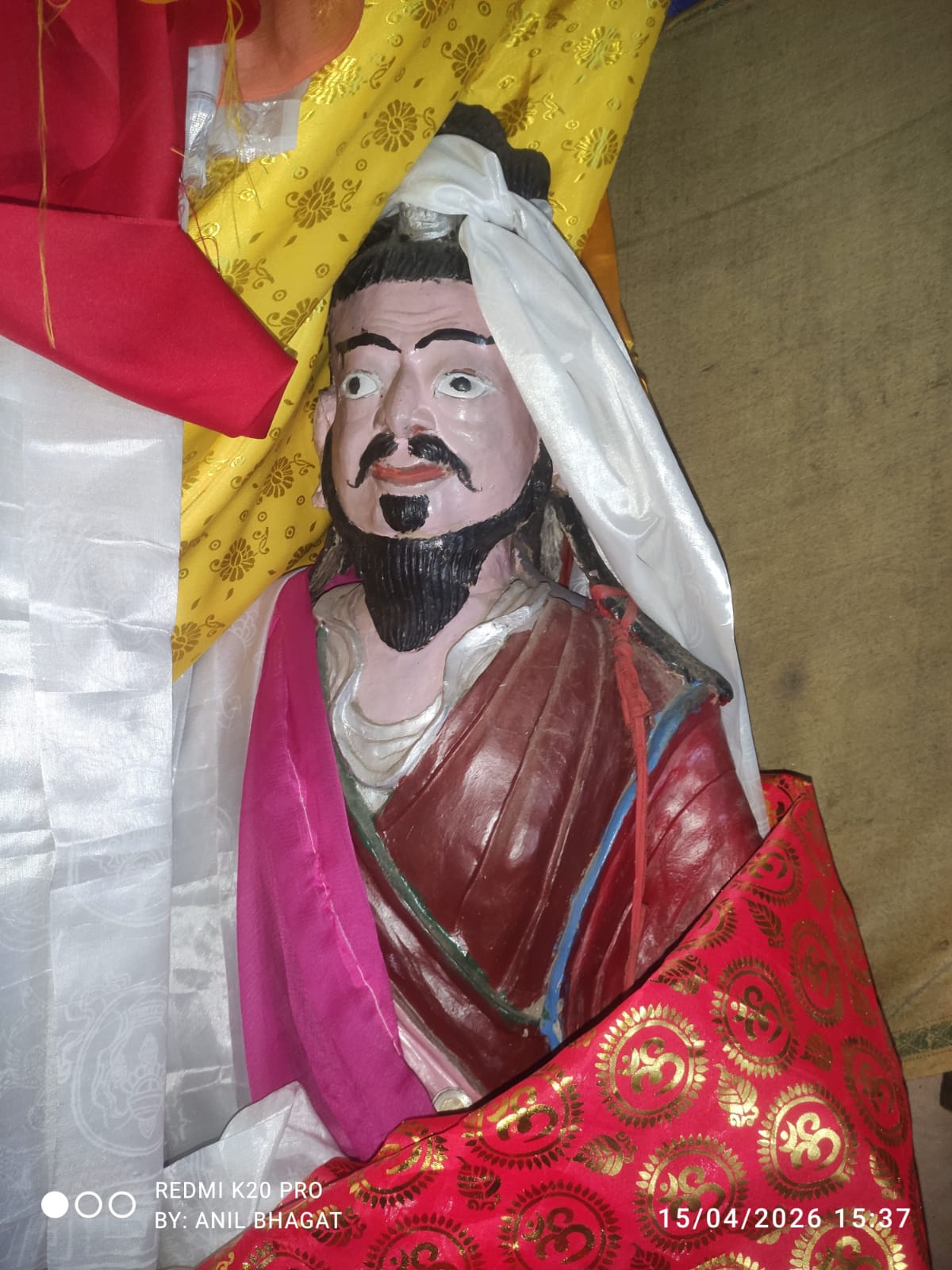
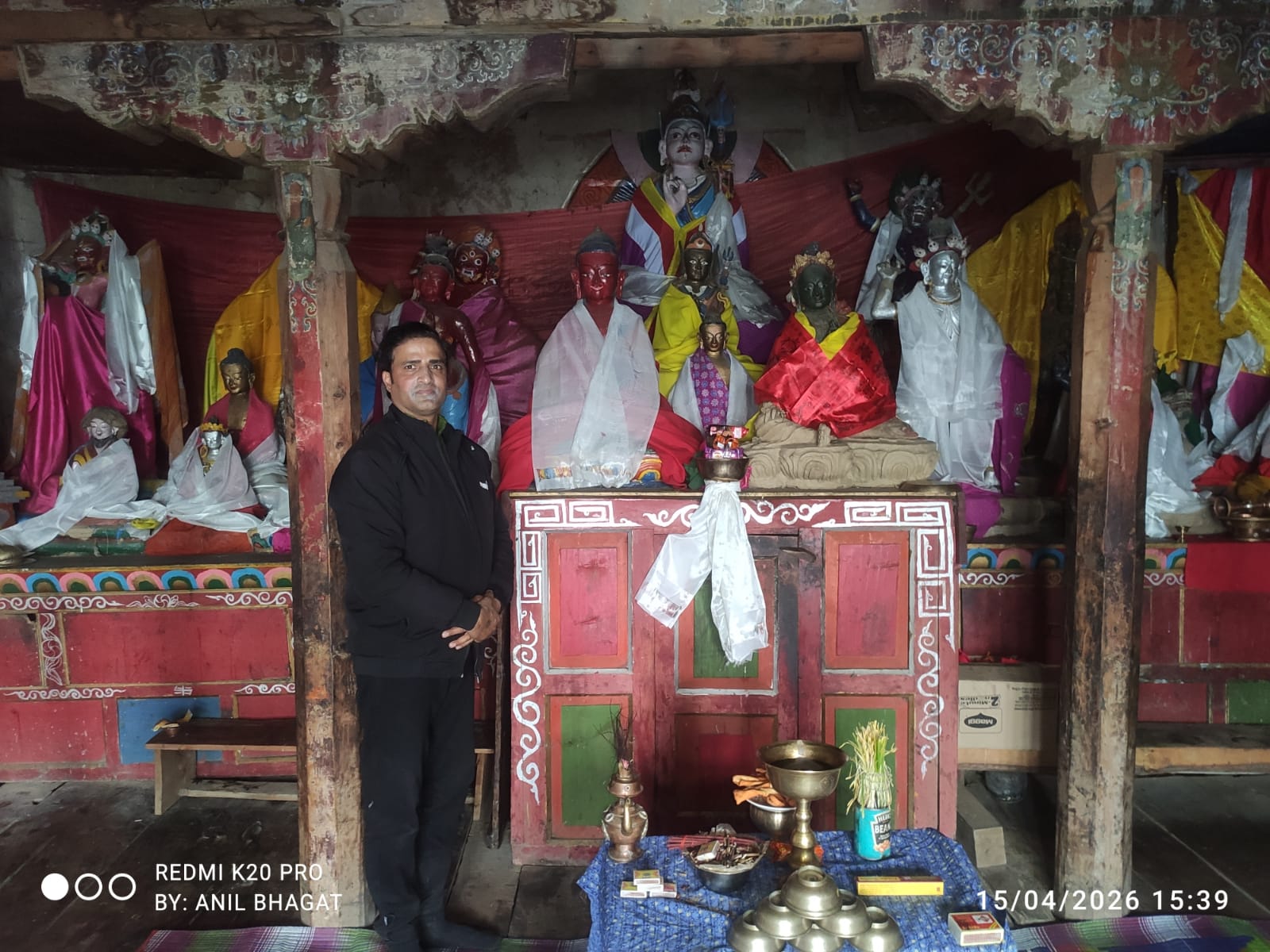
Alongside the library, Ahiliya produced art. The idols related to Buddhism were made of mud yet crafted very beautifully and colourful. This refers to the clay sculpture tradition found across the western Himalayas, from Tabo in Spiti to Alchi in Ladakh. Clay, mixed with straw, paper, and natural binders, was modeled over a wooden armature. Once dry, it was painted with mineral pigments: lapis for blue, malachite for green, cinnabar for red. The idols at Ahiliya included figures of Mahatma Buddha, likely meaning Shakyamuni symbolizing indestructible truth. Mud may sound humble, but these were not crude figures. The tradition requires master sculptors who understand iconometry the strict canonical proportions for each deity. A half-inch error in the distance between the eyes could render a statue ritually useless. That the notes remember them as beautiful tells us Ahiliya had artists of the highest grade. In a region where bronze was scarce and transport costly, clay became the medium of transcendence.
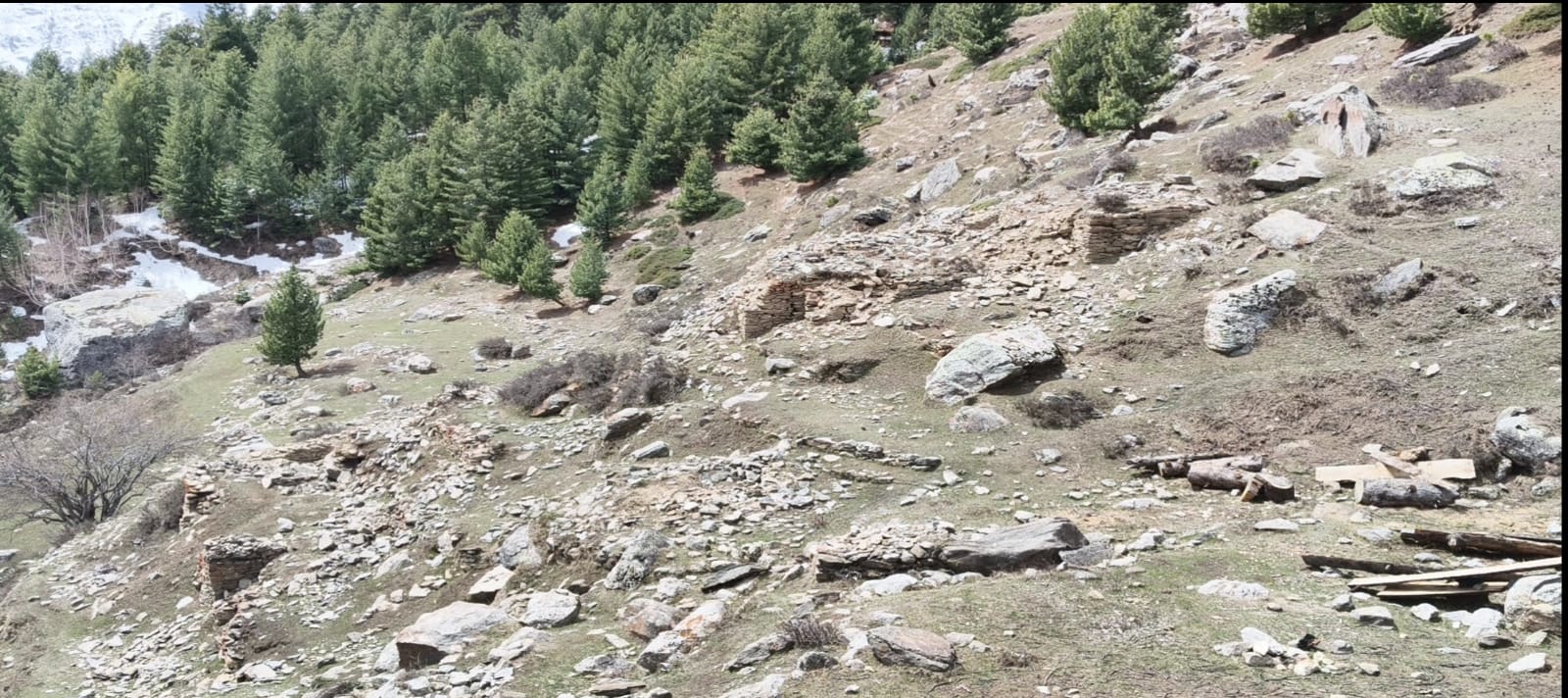
The monastery’s long continuity ended in a single day. In 1979 AD, a massive avalanche struck Ahiliya. The human cost was severe loss of lives and cattle, the two pillars of a mountain village economy. Buildings and habitats were flattened under thousands tons of snow and debris.
For historians, the cultural loss is staggering. Almost ninety percent of the manuscripts were lost. Imagine that figure. Nine of every ten texts commentaries annotated by generations of scholars, original compositions by Ahiliya’s own monks, and letters between monasteries, buried or pulped by snowmelt. With them went a library that may have held the only surviving copies of certain texts. The Nalanda lineage was already broken in the 12th century. Centers like Ahiliya quietly preserved fragments of it. In 1979, most of those fragments vanished. The idols fared little better. Mud sculpture is durable in dry cold but catastrophic in water. An avalanche becomes a flood when it melts. The clay dissolves, the pigments run, the wooden armatures rot. Only fragments could be recovered.
The story does not end in 1979. The remaining idols and manuscripts recovered were placed in another newly constructed Gompa at village Ahiliya Gandhari. This matters for two reasons. First, it shows resilience. Disaster did not break the thread. The community salvaged what it could and re-consecrated it. A Gompa is not a museum. It is a living ritual space. By installing the survivors in a new structure, the people of Gandhari Panchayat ensured the lineage continued, even if diminished.
Second, it creates an obligation. Those ten percent of manuscripts are now disproportionately important. Each surviving folio may be the last witness to a teaching, a dialect, and a historical event. The remaining clay fragments, however damaged, are primary sources for art historians studying the Kishtwar style a school we barely knew existed until now.
A small ruined Buddhist site in village Ahiliya of Gandhari Panchayat commands our attention today because village Ahiliya disrupts the common map of Himalayan Buddhism. The standard narrative runs from Nalanda to Tibet to Ladakh to Dharamshala. It privileges big names and surviving institutions. Ahiliya reminds us that the network was far denser. For every Hemis Monastery or Thiksey Monastery of Laddakh or Shashur Monastery of Lahaul valley of Himachal Pradesh that endured, there were dozens of Ahiliyas that sustained the tradition in obscurity until geography or disaster erased them. The Bhutan connection is especially telling. Most people associate Bhutanese Buddhism with Bhutan itself. Yet here is evidence of Bhutanese monks founding and running a centre deep in present-day Jammu and Kashmir, centuries ago. It speaks to a period when the Himalayas were not barriers but a connected corridor of pilgrimage, trade, and scholarship. The same monk who copied a text in Ahiliya might later teach in Paro of Bhutan. The same sculptural style might travel from Kurseong to Kishtwar and other parts of North India.
Kishtwar District itself is often overlooked in Buddhist studies, overshadowed by Ladakh and Lahaul. But Paddar Valley has long been a cultural crossroads. The old trade route to Zanskar via the Umasi La passed near here. Ahiliya sat on or near that route. Its monastery likely served as a rest point, hospital, and school for traders, pilgrims, and monks alike.
The 1979 avalanche was a natural disaster. The second disaster would be forgetting. Kishtwar’s climate and out-migration have all worked against preservation. Oral histories die with elders. The new Gompa’s manuscripts may be vulnerable to damp, insects, and fire. The clay fragments need conservation before they crumble.
The J&K Department of Archives, Archaeology and Museums, along with the Central Institute of Buddhist Studies, should survey Ahiliya. The site of the original monastery, even under debris, may yield votive stupas, ceramic, or foundations that carbon dating could unlock.
Conclusion:
The handwritten note that began this inquiry is barely a page long. But it opens a door to a world. It tells of a time when Ahiliya, now a quiet village in Paddar, was a lamp in the forest. Scholars crossed blizzards to reach it. Scribes spent lifetimes there copying the words of the Buddha. Artists mixed mud and stone-blue to give those words a face. An avalanche took 90% of it in a day. Yet the act of writing that note, and of rebuilding a Gompa for the remnants, is a defiance of erasure. The lesson of Ahiliya is not just about loss. It is about the sheer density of history in the Himalayas. There are dozens of such places in Warwan, in Marwah, in Dachhan where a single elder’s memory or a single folio in a village shrine may rewrite what we think we know. Before the next avalanche, flood, or simple decay takes them, we owe it to them to listen.
The monastery is gone. The learning centre is gone. But the fact that we can still name Ahiliya, Gandhari, and the scholars of Zanskar and Bhutan in one breath means the connection is not entirely severed. It waits, under snow and silence, for us to write it back into the world.
I respectfully urge the Hon’ble Leader of Opposition and MLA of this constituency Sh. Sunil Sharma, and the District Administration of Kishtwar to extend financial support for the renovation of the Gompa at village Ahiliya. I further request that necessary steps be taken to ensure the proper conservation of the invaluable statues, Thangka paintings and ancient manuscripts housed there.
Author: Anil Kumar Bhagat (M.A. History, M.A. Sociology, B.Ed., I.T. & E.S.M.)
(Teacher in Education Department of U.T. J&K)
(Freelancer, Ancient Indian History, Culture and Archaeology)
Email: anilk11111982@gmail.com
Disclaimer:This article presents the author’s personal research and interpretation of historical events. www.mykishtwar.com provides this platform for the dissemination of information and diverse perspectives. The accuracy, completeness, and validity of any statements made within this article are solely the responsibility of the author. The content of this article is the sole responsibility of the author. www.mykishtwar.com does not assume any liability for the information presented. The author’s views and opinions do not necessarily represent those of www.mykishtwar.com. Readers are encouraged to conduct their own research and verify the information presented.