You are here
Home > Tourism > Hot Springs in Kishtwar

Hot Springs in Kishtwar

♨️

Tourism & Natural Heritage · Kishtwar

Hot Springs of Kishtwar
Tatapani · Nag · Nature’s Healing Waters

Sacred, sulphurous, and steeped in legend — the hot springs of Kishtwar have healed pilgrims and travellers for thousands of years, flowing from the heart of the Himalayas.

“Centuries ago, faith in the unknown inspired the elders of Kishtwar to worship their springs. What it would yield was perhaps unfathomed then — but today it is surely evident.”
— mykishtwar.com

Kishtwar — A Land of Sacred Hot Springs

Kishtwar is blessed with a remarkable number of natural hot springs — locally known as Nags — scattered across its mountains, valleys, and river banks. These geothermal wonders have been sacred to the people of Kishtwar since time immemorial, worshipped as divine gifts from the gods and revered for their extraordinary medicinal properties.

The most famous springs of Kishtwar — Gudresh Nag, Pooti Nag, and Kumai Nag — are deeply woven into the cultural fabric of the district. The hot spring sites of Tatapani Paddar, Tatapani Renai Marwa, Puller Nagseni, and Kiyar Dachhan attract visitors from across the region and beyond, offering a combination of natural therapy, spiritual significance, and breathtaking Himalayan scenery found nowhere else in India.

♨️ Tatapani Paddar
♨️ Tatapani Renai Marwa
♨️ Puller Nagseni
♨️ Kiyar Dachhan
💧 Gudresh Nag
💧 Pooti Nag
💧 Kumai Nag
♨️

Tatapani — Paddar

तातापानी पाडर · Holy Hot Springs of Sheshnag

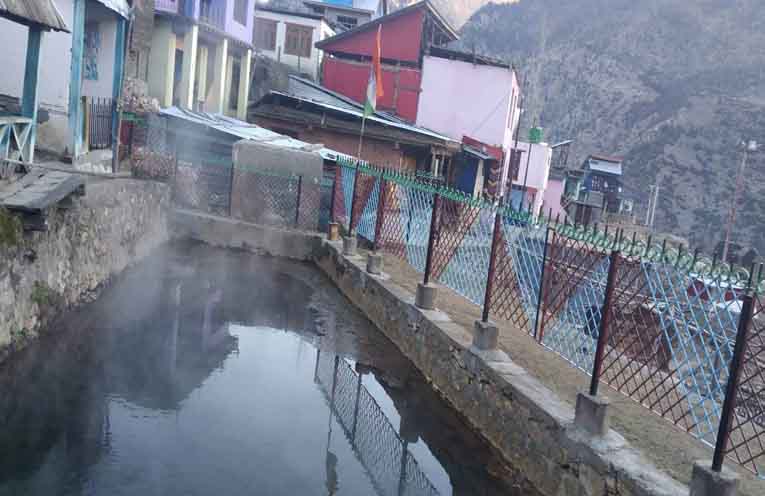
Tatta Pani in Paddar Tehsil is one of Kishtwar’s most famous health resorts and a destination of deep spiritual significance. The name itself — Tatapani, meaning “hot water” in Hindi — describes the steaming, sulphurous springs that erupt from the earth here in a continuous, ancient rhythm.

The main source of the hot spring is a pond where boiling hot water gushes out continuously — so hot that it is difficult for a person to touch it directly. Around this central source are several other springs, ranging from near-boiling to pleasantly lukewarm — creating natural bathing pools of varying temperatures. Another hot spring is also located on the right bank of the Chandra Bhaga river, opposite Padyarna.

The Legend of Sheshnag — 7,000 Years Ago

Seven thousand years ago, during the times of the Mahabharata, the elder brother of Lord Krishna — Balram — came to this valley in the form of a sadhu wanderer named Sheshnag. He was one of the Naga sadhus, feared and respected as possessing mystical powers over water and snakes.

One old lady, Ruti — a local queen whose husband had died — refused to respect the wandering saint. When he asked for land, she struck him in the eye with a spade and remained stubborn. Sheshnag then stabbed his trishul (trident) into the ground. When he pulled it out, a great flood destroyed all of Ruti’s land and crops.

Another local Rana king, who came from a place called Jaar, came to Sheshnag and begged for mercy, asking the flooding to stop. Sheshnag then said: “I am leaving this place — there will be a stone where I meditate tonight, and hot water will ooze here. Build a temple here.”

The next day, the stone appeared in the form of Sheshnag, along with the hot spring — and a temple was duly built at that sacred spot. That temple stands to this day.

The Temple of Sheshnag

The wooden temple at Tatapani Paddar is constructed in the distinctive style of the Spiti architectural tradition, with intricate carvings on its front and back. The front features the image of Sheshnag, carvings of Hanuman (symbolising strength), and images of Ravana, Ram, and Shiva with his trident. At the very top, two eyes represent Mahakali — the Earth Goddess.

Inside the temple stands the sacred stone of Sheshnag, along with a three-inch tall Buddha, conch shells, holy water, ritual bells, tinsel, trishuls for visiting priests, and posters of Shiva and Hanuman — an extraordinary syncretic collection reflecting the deep cross-faith heritage of Kishtwar.

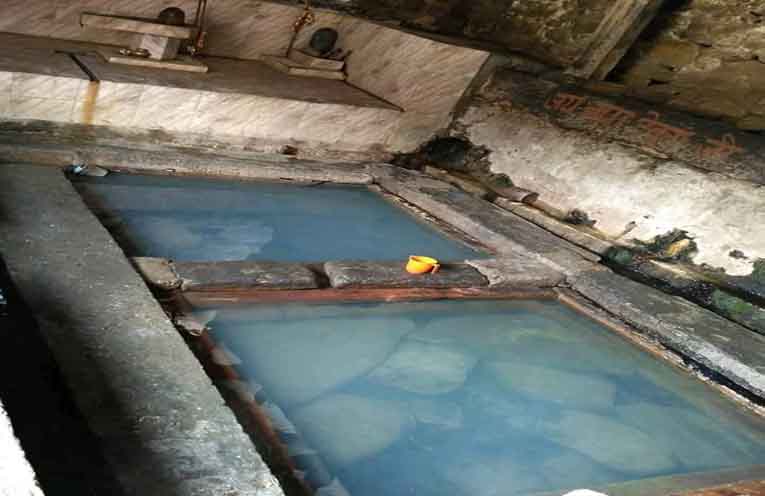
Below the temple, the springs bubble with sulphurous heat — near boiling at the source. A stone floor using a tongue-and-groove technique creates a basin that holds the water, with excess flowing into an adjacent room with hot and warm bathing pools. At the centre of the pool is a wooden plug that is removed for cleaning.

The Sacred Ritual of Chito Village — Once Every Three Years

Once every three years, on the full moon of January or February — the darkest and coldest of months — a family from Chito village walks through the snow from Paddar Valley to Tatapani to clean the springs after midnight. A local fair is held as part of this ritual celebration. The wooden plug is removed, the springs are cleaned, and a new plug is placed. This tradition began when Sheshnag himself walked to Chito village and was helped by Chito Devi and four or five other villagers — and it has been faithfully continued from generation to generation ever since.

♨️

Tatapani Renai — Marwah

तातापानी रेनाई मरवा · Medicinal Springs of Anjar

In Marwah Tehsil of Kishtwar district, approximately 12 kilometres from village Youdru, lie the famous hot water springs at Anjar in the Rinai Nalla (stream). The springs are situated at a splendid scenic location — a place of remarkable natural beauty where people come from far and wide specifically to bathe in the healing waters.

The water of the Anjar springs has well-recognised medicinal properties and is particularly beneficial for people suffering from skin ailments and rheumatic pains. Visitors typically stay for a couple of days, bathing three times daily in the hot spring water — a course of treatment that local tradition and experience have found relieves many chronic conditions.

The springs are famous even in the Kashmir Valley — a testament to the exceptional quality of their waters. Groups of visitors from Kashmir regularly make the journey to Anjar specifically for therapeutic bathing, underlining the regional reputation of the Renai Marwa springs as one of the finest natural health resorts in the entire Himalayan belt.

💧

Puller — Nagseni

पुलर नाग्सेनी · Natural Spring of Nagseni Tehsil

Puller in Nagseni Tehsil is another of the natural spring sites of Kishtwar — part of the district’s remarkable network of geothermal water sources that have sustained communities and attracted pilgrims for generations. Like the other Nags of Kishtwar, Puller is a site of both natural significance and local cultural reverence.

The springs at Puller, set within the rugged mountain landscape of Nagseni Tehsil, add to the impressive list of natural water heritage sites that make Kishtwar one of the richest geothermal destinations in the entire Jammu and Kashmir region — waiting to be developed as a health tourism destination.

🏔️

Kiyar — Dachhan

कियार दछन · Inside Kishtwar National Park

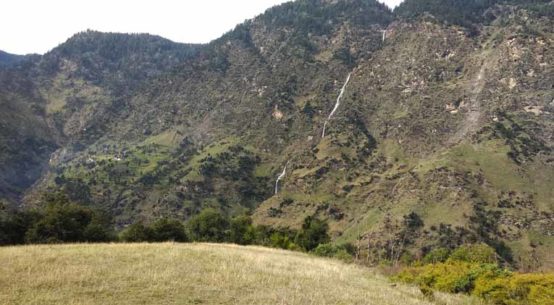
Kiyar Nala falls within the boundaries of the Kishtwar National Park — Jammu province’s only national park, spread over 2,100 sq. km across Dachhan and Marwah Tehsils. This already spectacular setting makes the hot springs of Kiyar particularly extraordinary: they are accessible only to those willing to journey deep into one of the most pristine and biodiverse Himalayan landscapes in India.

The Kiyar Nala area is famous for its exceptionally rich flora and fauna. Many rare animal and bird species can be found here that are encountered nowhere else. Most significantly, Kiyar is considered one of the prime abodes of two of India’s most endangered species: the Hangul (Kashmiri Red Deer) and the Musk Deer — two creatures whose presence transforms Kiyar into something far more than just a natural spring site.

The hot springs of Kiyar village are located on the bank of the Kiyar Nala stream, approximately 15–25 kilometres ahead of Kiyar village — a journey through stunning national park terrain that is itself an unforgettable experience.

🦌
Hangul
Kashmiri Red Deer — critically endangered species
🦌
Musk Deer
Himalayan musk deer — rare and highly protected
🌿
Rich Flora & Fauna
Diverse rare bird and plant species within the National Park

Famous Nags (Springs) of Kishtwar

Beyond the major Tatapani sites, Kishtwar is home to several other historically significant springs — locally called Nags — that have been worshipped by communities for centuries. The three most celebrated are:

💧 Gudresh Nag

One of the most revered of Kishtwar’s sacred springs, Gudresh Nag is a natural spring of great cultural and religious significance to the local communities. Its waters are considered holy and its surroundings have historically been a place of meditation and community gathering.

💧 Pooti Nag

Pooti Nag is another celebrated spring of the Kishtwar region, known locally for its consistent flow and the reverence in which it has been held since ancient times. Like all Kishtwar Nags, it forms part of the living spiritual landscape of the district.

💧 Kumai Nag

Kumai Nag completes the famous trio of Kishtwar’s most celebrated Nags. These three springs together represent a network of sacred water sites that have defined local worship, health practices, and cultural identity for generations.

Medicinal & Therapeutic Benefits

The hot springs of Kishtwar — particularly those at Tatapani Paddar and Tatapani Renai Marwa — are sulphurous springs. Their mineral-rich waters have been used for centuries as natural therapy for a range of conditions. Visitors and local practitioners report benefits including:

🩺 Skin disorders & ailments
💪 Rheumatic & joint pain
🧘 Muscle relaxation
🌡️ Improved circulation
✨ General rejuvenation
💆 Stress relief

Untapped Tourism Potential

“Kishtwar is a nature’s paradise — full of hidden charm, wonderful sites and spots, health resorts, tourist locations, and famous historical and religious places. The whole region has fabulous potential for the tourism industry which has been neglected for decades.”

— mykishtwar.com

💡 Did you know? The ancient stone temple at Tatapani Paddar houses not just Hindu deities but also a three-inch tall Buddha statue — a remarkable testament to Kishtwar’s multi-faith heritage. The temple’s wooden construction follows an architectural style from Spiti Valley — evidence of the ancient cultural connections between Kishtwar, Ladakh, and Himachal Pradesh that long predate modern administrative boundaries.

Related Topics

Hot Springs Kishtwar
Tatapani Paddar
Tatapani Marwah
Kiyar National Park
Gudresh Nag
Pooti Nag Kishtwar
Sheshnag Tatapani
Sulphur Springs J&K
Kishtwar National Park
Hangul Musk Deer Dachhan
Tourism Kishtwar
mykishtwar.com

Tourism & Natural Heritage Series  |
mykishtwar.com
·  Kishtwar, Jammu & Kashmir, India
Similar Articles

Leave a Reply

Top