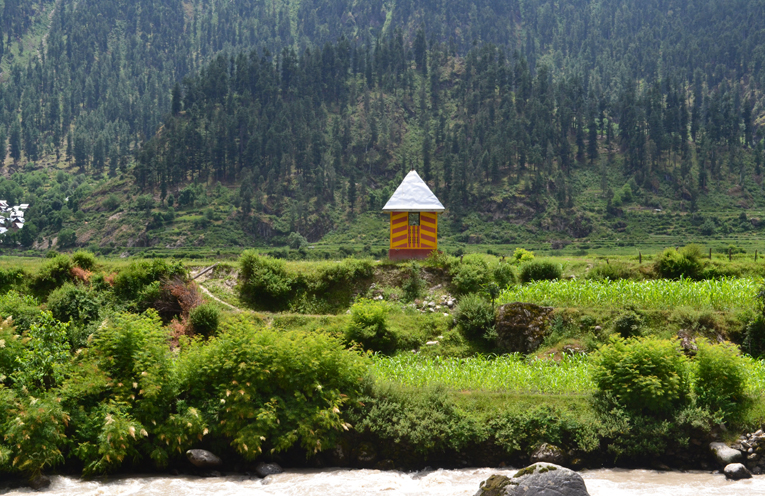
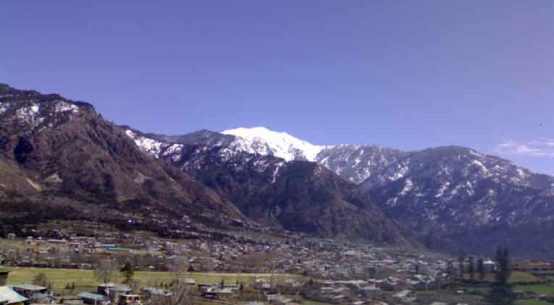
“Lofty hills stand guard over it on all sides. Snow-clad Brahma peaks, Sickle Moon, Crooked Finger, and Arjuna peak all enhance the beauty of Dachhan and beckon trekkers to lead expeditions on these high mountains. The distance from Kishtwar bus stand to Panjdara on foot is about 50 kilometres — Dachhan is geographically neither linked to Kishtwar nor to Marwah. It is a separate entity.”
— mykishtwar.com archives, Tehsil Dachhan
Tehsil Dachhan is one of the most scenic and remote tehsils of District Kishtwar and falls under the administrative jurisdiction of the Marwah Sub-Division. Tucked away amidst the towering, snow-capped peaks of the Greater Himalayas, Dachhan is a land-locked alpine valley of extraordinary natural beauty — enclosed by soaring mountain ridges that have kept it completely independent of mass commercialisation and entirely free from the crowds that define conventional tourism.
Dachhan serves as the base camp for mountaineering expeditions to high mountain peaks including Sickle Moon (also called Sickle North), Brahma peaks, Vaishno, Hudh Mata, and Mahesh. It remains one of the least explored regions of the Chenab Valley and possesses immense potential for eco-tourism, adventure tourism, pilgrimage, and nature-based recreation.
Geographical Location — A Separate Entity
The bridal path from Ikhala to Sonder in Dachhan — a distance of about 15 km — passes through dense forest without any habitation except at Pinjari village, situated about a kilometre from the road at Lohlu. Likewise, from Lopara to Hanzal, another 15 km tract is also covered by forests without any habitation in between. Thus Ikhala is the gateway to Dachhan from the Kishtwar side, and Hanzal is the gateway to Marwah from the Dachhan side.
The distance from Kishtwar bus stand to Panjdara on foot is about 50 km. Thus Dachhan is geographically neither linked to Kishtwar nor to Marwah. It is a separate entity. Spanning an area of approximately 100.50 sq. km, Dachhan is distributed across 9 Panchayat Halqas, with the chief administrative village Panjdara sitting on the left bank of the Mariv Sudher River where the majority of the local population resides.
District: Kishtwar |
Sub-Division: Marwah |
Area: ~100.50 sq. km |
Population: ~12,765 (Census)
Panchayats: 9 Halqas |
Tehsil HQ: Panjdara (on left bank of Mariv Sudher River) |
Gateways: Ikhala (south, from Kishtwar) & Hanzal (north, to Marwah)
Borders & Boundaries
High Himalayan ranges & alpine forests → Marwah Valley (via Hanzal)
Kishtwar Tehsil (via Ikhala / Ekhala gateway)
Marwah Valley & Zanskar mountain ranges
Mountain ranges extending towards South Kashmir
The Three Sacred Nalas of Dachhan
Dachhan branches out in three distinct alpine valleys or “Nalas” — Nanth Nala, Kibber Nala, and Kiyar Nala. Each offers distinct character — from spiritual significance to world-class mountaineering to pristine wildlife habitat:
Weather & Climate
Dachhan experiences a sub-alpine to alpine climate, heavily influenced by its high elevation and surrounding glaciers. Traditional local architecture — slanted wooden and slate roofs — is specifically designed to withstand the immense weight of winter snowfall. The ideal window to explore Dachhan is April to October.
Dachhan — Premier Mountaineering Base of Kishtwar
Kishtwar serves as the base camp for trekking and mountaineering to various mountain peaks like Sickle Moon, Crooked Finger, Eiger, and Brammah-I — and it is Tehsil Dachhan that provides the actual approach to all of these legendary summits. Except Sickle Moon, none of these mountain cliffs have so far been scaled (as of earlier records), making Dachhan a frontier landscape for high-altitude mountaineering.
Sacred Pilgrimages & Spiritual Sites
The spiritual landscape of Dachhan is profound and deeply original. The valley is the proud host of the annual Hudh Mata Yatra — one of the most spiritually significant pilgrimages of the Chenab Valley — and is home to a series of extraordinary natural phenomena that devotees consider divine miracles.
☂ Hudh Mata Yatra — The Sacred Pilgrimage
Dachhan is the proud host of the annual Hudh Mata Yatra. Pilgrims trek through the Nanth Nala to offer prayers at the sacred shrine of Hudh Mata (a manifestation of Mata Parvati). The journey is deeply spiritual, marked by chanting of local hymns amidst ancient mountain forests. The shrine houses three naturally formed ice lingams of the Shiv Parivar — Shiva, Parvati, and Ganesha — in a sacred cave in the Nanth Nala. See our dedicated Hudh Mata Yatra 2026 guide for the complete schedule.
🌊 Trisandhiya — The Miracle Stream
Located along the Hudh Mata pilgrimage route in the Nanth Nala, Trisandhiya is considered a glorious miracle of nature. It is a unique mountain stream that flows down a cliffside only three times a day at specific intervals — seemingly appearing out of nowhere and receding back upward into the rocks. Pilgrims consider bathing in its sudden, sacred waters a profound spiritual blessing.
🌉 Brahmsar Lake
A high-altitude, icy-cold sacred lake situated at the base of the Brahma peaks. Devotees brave the freezing temperatures and challenging terrain to take a holy dip in its waters for spiritual purification. The lake is surrounded by some of the most dramatic Himalayan scenery in the entire Nanth Nala complex.
🌘 Bathastal Grotto — The Sacred Cave
About a kilometre from Suid, the Bathastal cave has a narrow mouth through which water flows, and visitors have to pass through a tunnel with torches. This long, shallow natural cave with a narrow entrance is a fascinating natural feature and pilgrimage site — a rock tunnel where mountain water flows continuously in a subterranean stream.
🏠 Kaikoot Wooden Temple
An ancient traditional wooden temple of great archaeological and religious value, standing as a living testament to Dachhan’s hill architecture heritage. Built using traditional mountain carpentry techniques with locally sourced timber, the Kaikoot temple is one of the finest examples of indigenous Himalayan religious architecture in the Chenab Valley.
☀️ Mathralla Springs
Mathralla has natural mountain springs and a rock-cut statue of a cow. The springs attract nature lovers and trekkers to one of the most scenic spots in the lower Dachhan valley. The crystal-clear spring waters of Mathralla are also celebrated as some of the finest trout-fishing waters in all of Kishtwar district.
Kishtwar High Altitude National Park
One of the most significant natural attractions associated with Tehsil Dachhan is the Kishtwar High Altitude National Park. The national park encompasses the Kibber Nala, Nanth Nala, and Kiyar Nala — the very three alpine valleys that define Dachhan’s geography — as well as high-altitude meadows, rugged mountain terrain, and glacial valleys. The park is internationally recognised for its spectacular landscapes and rich Himalayan biodiversity and is considered among the most pristine protected areas in the western Himalayas.
Kishtwar National Park — Key Wildlife in Dachhan
🐕 Fauna
- Snow Leopard
- Himalayan Brown Bear
- Musk Deer
- Ibex and Thar
- Various Himalayan bird species
🌿 Flora
- Deodar and Pine forests
- Fir and Spruce vegetation
- Alpine pastures and meadows
- Medicinal herbs and plants
- Wild Gucchi (Morchella) mushrooms
🏫 Park Coverage
- Kibber Nala catchment
- Nanth Nala catchment
- Kiyar Nala catchment
- High-altitude meadows
- Glacial valley ecosystems
Economy, Culture & Unique Treasures
The isolation of Dachhan has preserved an incredibly rich cultural ecosystem shared by the traditional Pahari and Gujjar communities. Traditional housing structures are meticulously crafted using locally sourced timber, river stone, and mud mortar — reflecting a lifestyle completely in harmony with nature. Local artisans excel in weaving thick, high-quality woollen shawls and traditional blankets to combat the intense Himalayan winters.
Wild Morchella (Gucchi) and wild Cumin (Zeera) are among the scarce natural treasures found in Kishtwar, augmenting its diverse and exclusive offerings. Dachhan is particularly celebrated across Jammu and Kashmir for its premium wild Gucchi mushrooms (Morchella esculenta) — foraged carefully by locals from the sacred forest floors during early spring. This rare culinary delicacy is highly prized in gourmet markets worldwide. Gucchi Pulao is celebrated as one of Kishtwar’s signature dishes — a direct product of Dachhan’s extraordinary forest bounty. Local households earn significant seasonal income from Gucchi collection and sale.
Key Economic Activities of Tehsil Dachhan
- Mountain terrace farming
- Horticulture (walnuts, apricots)
- Livestock rearing (sheep, goats, cattle)
- Wild Gucchi (Morchella) mushroom collection
- Medicinal herb gathering
- Seasonal shepherd migration
- Trout fishing (Mathralla streams)
- Traditional weaving (woollen shawls)
- Pilgrimage & eco-tourism services
Village-wise Census Data — Tehsil Dachhan (2011)
The following table presents complete village-wise demographic data from the Census of India 2011 for the five principal villages of Tehsil Dachhan, covering population, sex ratio, literacy rates, and caste/tribe composition.
How to Reach Tehsil Dachhan
Reaching Tehsil Dachhan requires a sense of adventure. The valley is connected to Kishtwar through mountain roads via Bhandarkoot and Patimhala — from where light vehicles can reach Ikhala, and the final 15 km journey to Sonder and onward into Dachhan is done on foot through dense uninhabited forest.
Why Visit Tehsil Dachhan?
Top Reasons to Explore Dachhan, Kishtwar
- Sickle Moon (6,774 m): Base camp and primary access point for the highest summit of the Kishtwar Himalaya sub-range — first ascended in 1975
- Brahma, Arjuna & Crooked Finger Peaks: A cluster of world-class mountaineering objectives in a single compact valley system
- Hudh Mata Yatra: The sacred annual pilgrimage through the Nanth Nala — Trisandhiya miracle stream, Brahmsar Lake, sacred cave
- Kishtwar National Park: Internationally recognized protected area covering all three of Dachhan’s nalas — snow leopards, brown bears, musk deer
- Wild Gucchi Mushrooms: Among the finest and most prized Morchella mushroom-producing forests in all of J&K
- Trout Fishing at Mathralla: Crystal-clear mountain streams with superb trout fishing in a pristine, crowd-free environment
- Bathastal Grotto & Kaikoot Temple: Natural cave tunnel and ancient wooden temple — unique cultural and geological heritage
- One of the least explored and most ecologically pristine valleys in all of Kishtwar district — a true wilderness experience
Dachhan is mentioned as a key attraction of Kishtwar’s sightseeing alongside Nagseen, Sarthal, Paddar, and Chowgan. The valley’s mountaineering heritage was documented by British-era writers — the steep Brahma mountain peak situated at Dachhan is documented by British writers including Otto Rothfield in his travelogue “With Pen and Rifle in Kashmir.” These early European accounts of Dachhan’s extraordinary mountain landscape helped put the Kishtwar Himalaya on the global mountaineering map in the late 19th and early 20th centuries.
Related Tags
Dachhan Valley Kishtwar
Sickle Moon Peak
Brahma Peak Dachhan
Hudh Mata Yatra
Trisandhiya Stream
Brahmsar Lake
Nanth Nala Kishtwar
Kishtwar National Park
Gucchi Mushrooms Dachhan
Trout Fishing Mathralla
Sonder Village Kishtwar
Marwah Sub-Division
Chenab Valley J&K
Related Topics on mykishtwar.com
| Established 2011 | Kishtwar District, Jammu & Kashmir, India
| contact@mykishtwar.com
| +91-7006607991

Sunil You should put Map on the site. Starting form kishtwar you need to mention all the necessory destinations along with distance. this will help tourist to know the actual distance and the way how it is. Rest the secript is good but needs modification.
I have posted a new entry about Hudh Mata Yatra and Tri Sandhya, I req you to have a look.
Critics are always welcome .